Dedicated to the Cargo Cults of Biology Science, Biotechnology and the Pharmaceutical Industry.
"So we really ought to look into theories that don't work, and science that isn't science"
Richard Feynman,
Cargo Cult Science,
From a Caltech commencement address given in 1974
The FDA approved a drug for the treatment of Alzheimers on June 6, 2021.
Today FDA approved Aduhelm (aducanumab) to treat patients with Alzheimer’s disease using the Accelerated Approval pathway, under which the FDA approves a drug for a serious or life-threatening illness that may provide meaningful therapeutic benefit over existing treatments when the drug is shown to have an effect on a surrogate endpoint that is reasonably likely to predict a clinical benefit to patients and there remains some uncertainty about the drug’s clinical benefit.
In all of my experience with biotechnology, I have never worked at a company or research laboratory that did not have an amyloid beta project underway. Aduhelm is an antibody that binds to amyloid beta. In my core belief in the cynefin method of thinking (simple, complicated, complex), this approach has always been simple. Alzheimers, the human brain and aging are complex. Amyloid beta as a drug target is simple using complicated research and complicated methods of developing an antibody. Clinical trials are also complicated. BUT... to merely hire scientists to develop an antibody against Amyloid Beta is simple. Telling doctors and clinical trial specialists to hammer that square peg through a round hole is simple.
But it didn't work. At least that was the conclusion in:
Once again, we really should look into science that isn't science. What prompted the powers that be to approve the drug? The need to fill the gap was too great. They needed to offer something even though that something doesn't work.
What happens next? The answer is well known in the pharmaceutical industry. If the patient gets better... claim responsibility. If they get worse... they came too late. If they stay the same... up the dose.
Elizabeth Homes was on trial for fraud. She intentionally lied to people to enrich herself and maintain her multi-billion dollar biotech empire. But remember, biotechnology has a substantial cargo cult science branch of science and technology. What Ms. Holmes did was not unusual. Her crime against the good name of science is the same as most biotech/pharma companies. Fake it til you make it.
Biotechnology is good. It is real. I once argued with a distant family member over the existence of DNA. His church had put on a seminar by someone who argued that DNA is a man made construct. How then did I use it to do my work? How could I order a piece of DNA and end up with a protein that I could purify and use to do specific things?
Science is about the truth. Cargo Cult Science is about BS. A bullshit artist prefers the truth when they can use it but the narrative is of utmost importance.
Elizabeth did not create a blood testing device that provided accurate results. If you had a concentration of glucose in your blood of X you could not expect Theranos technology to ever know what X is. Theranos boasted that their blood testing device could perform 273 tests. No longer would a patient have to go into a hospital and pay the exorbitant cost of their tests. Using a device the size of a toaster one could get a pin prick, have the blood sucked into the Theranos "Nanotainer", insert the "Nanotainer" into the device and within an hour have the results sent to their doctor. The only problem was that the results were not accurate. The tests did not work
Now... to Elizabeth Holmes, this did not pose a big problem. She most likely assumed that scientists could be hired to sort out those pesky details. Her mission was go raise capital to hire the scientists and provide them with what they needed. What they all needed however was the scientific method. It's not for sale in the Sigma catalog.
Any and all of the biotechnology companies that I worked for could have simply been a branch of Theranos. We all had the same problem. We began with an outcome that we would prefer. We then hired lower level "scientists" and forced them to provide evidence that the narrative is the truth.
Perhaps Elizabeth Holmes did not know how science and technology works. Perhaps she believed that one begins with a narrative based on preference. Once the narrative began to fail she was too far into a lifestyle that was wildly exciting. Sitting on stage with Bill Clinton, face on the cover of Forbes, name on list of 30 (billionaires) under 30... must of have been intoxicating. She was in a place where she wanted to be. Science/technology would be her savior. She believed in science. She had faith. She did not understand that science is not about faith.
Her story is a cautionary tale of how science can devolve into Cargo Cult Science. It costs people money, careers and freedom. As Elizabeth settles into her jail cell, many more will begin their careers in the life sciences. They too will begin pushing narratives that are not true. The world of life science, biotechnology and medical science is wrought with fraud. We do not have a sure fire way of weeding out the CCS folk from the good. It is only through the study of such cases as the Theranos fraud that we can advance our understanding of what is science and what is not.
We have a long way to go. The scientific method remains in the same quandary as it did during Richard Feynman's day.
"Most people believe so many wonderful things that I decided to investigate why they did." "So we really ought to look into theories that don't work, and science that isn't science." -Richard Feynman.
Recently there was an exchange between Joe Rogan and Sanjay Gupta on Joe's show. It involves the controversial subject of Covid 19 treatments. Let us explore the use of language in this story and how it applies to the Cargo Cult belief system.
Stromectol is an anti-parasite human medication. DuraMectin is an anti-parasite horse medication. Both have, as the active ingredient, Ivermectin. Each drug has a name. They each have distinct ingredients. They are produced in separate locations by separate companies. They both use Ivermectin as the active ingredient.
Was it accurate that Joe Rogan took a horse medication versus a human medication? Did CNN lie?
As you know, The Cargo Cult Scientist is interested in the truth and how we get at it. What we know in this case is that Joe took an Ivermectin drug prescribed by his doctor. We know that CNN people said that Joe took a horse medication. If (and we don't know this) Joe took Stromectol, we could ask CNN a different question. Is Stromectol a horse medication. If they say yes, then the onus is upon them to prove that point. The argument they will make will be that Ivermectin is the active ingredient used to treat horses for parasites. We would then be arguing whether or not an active ingredient is the same as a drug.
Why does it matter? We human beings have different ways of dealing with the truth. If it suits our narrative we eagerly accept the truth and use it to make people think positively about our narrative. If it does not suit our narrative we downplay the truth. We find ways to discredit the truth. If we are clever we can fool people into focusing on the positive nature of our narrative while ignoring the negative impact the truth has upon our narrative.
This is a major factor in the Cargo Cult thought process. If the positive aspects of the narrative outweighs the negative aspects of the truth, people will accept the narrative.
"I think that there's a lot of people more concerned about being precisely, factually, and semantically correct than about being morally right." -Alexandria Ocasio Cortez
There is a reason why the scientific method has provided the world with so much. Human selfishness gets some people more than their fair share. It can also lead to a lifetime of unhappiness. Science only seeks to know the truth. Facts are used as tools to learn, not to manipulate the understanding of others. Being concerned about what is "morally right" is the purview of scoundrels.
Joe Rogan put Sanjay Gupta on the spot. He didn't ask Gupta if CNN had lied. He told Gupta that CNN lied and he asked if that bothered him. Gupta finally had to admit, "They shouldn't have said that." In other words, a news agency should not intentionally lie. True.
It has been a long time since I have turned to this blog to get some thoughts put into words. The blog was always a way of venting to myself. I didn't care if anyone read the blog. I was only trying to put into words the torment of working in a group think environment. Within this a handful of failed biotechnology companies and our industry I was always thinking... just the wrong thoughts.
Today I am tormented by the pandemic and the conversation around the virus. The first thing to point out is the virus itself. It is a Corona virus. It is called SARS-Cov-2 and is related to SARS-CoV (Sever Acute Respiratory Syndrome Corona Virus). SARS-CoV was the virus that led to the SARS pandemic in 2003. Here is a chart that compares the two:
SARS-CoV
SARS-CoV-2
Transmissibility R0
2·4
2·5
Incubation period
2 to 7 days
4 to 12 days
Days between symptom onset and maximum level of infectivity
5 to 7 days
0 days
Amount of patients with mild illness
Low
High
Amount of patients needing hospitalization
Most patients (over 70 percent)
Few patients (20 percent)
Amount of patients needing intensive care
Most patients (40 percent)
1 in 16,000
Risk factors for severe illness
Increased age, underlying illnesses
Increased age, underlying illnesses
The RNA sequences that have been published all seem to be in agreement. A complete genome sequence from Ranjit Sah et.al. https://mra.asm.org/content/9/11/e00169-20 was >99.99% identical to two previous published sequences. How does this sequence compare with SARS-CoV?
The SARS-Cov sequence was published in 2003 by the CDC. It is 29,727 bp (29811 bp in SARS-Cov-2) in length. Using the BLAST (Basic Local Alignment Search Tool) on the NIH page we come up with 82% homology.
The beginning of thinking about a problem is to gather the facts. We have lived with Covid 19 for a long time now. We have several vaccines. We have known knowns and known unknowns. And we have the problems associated with Cargo Cult thinking.
The unknown origin: Why does it matter? The normal genetic drift that leads to strain variations is useful information. In the chart above we see a few of the consequences of genetic changes. Should we be worried? What can we do to prevent negative outcomes (?) and so on.
The known danger: We know that most people who die from Covid 19 exceed the age of a normal life span. The sickest are mostly obese. The danger is not great among healthy younger people. We are therefore attempting to protect the vulnerable by not getting and spreading the virus.
HOW DO WE BEGIN TO UNDERSTAND SARS COV 2?
The problems of Cargo Cult Science among our professional science class had come home to roost. We are told to get vaccinated and to social distance. Wear masks and avoid crowds. It appears as though our highest ranking scientists have never thought about viruses before. They are ubiquitous. We need viruses to survive. How then do we now expect to eliminate the viruses we don't like?
Like everyone else, I don't have the answers. I have questions and those are considered taboo in the Cargo Cult. We should be using science to debunk claims that seem wrong. We should reject the main stream media sources and we should not take NIH/NAID/CDC... scientists to be any better than ourselves. Seek knowledge.
The company depicted in John Carreyrou's Bad Blood was indeed a Cargo Cult Biotech. A sociopath CEO gathers a group of highly educated individuals who pledge allegiance to the narrative. Step one was the narrative. Theranos had a good one, replace highly regulated laboratories and their skilled technicians with with a machine the size of a toaster. Step two was to hire people who will work backwards to provide the product and supporting details. As in all bullshit narratives, the truth is preferable. If the truth does not support the narrative, fake til you make it. The narrative will be altered only as the last straw.
Theranos began with a blood testing device called The Edison. The narrative was that Theranos would provide cheaper, faster and equally accurate blood tests. Hitherto people had to go to their doctor or the hospital to have blood drawn. The blood is sent off to the lab for whatever tests the doctor requires to make decisions on a persons health. The ground breaking technology at Theranos was going to change all of that. The patient would go into the pharmacy and enter a room where the Theranos technology would produce results within an hour.
The blood testing device replaced the hospital laboratory and highly trained/regulated staff. Hospital labs are ran by Medical Laboratory Scientists (MLTs). These individuals often get a bachelors degree in a life science then apply to an MLT program. The programs last a couple years and produce specialized hospital personnel. Errors in blood testing can lead to serious outcomes including death, thus the need for the highly educated and regulated staff.
At one point in the Theranos saga an executive from Walgreens was at Theranos for a meeting. He had a plan. He was going to have Theranos do a test on his blood that day. Then he was going to go to Stanford Hospital and get the same test done with them. It is about as simple as one can design an experiment. Someone makes the claim that they can do something better, faster and cheaper. Have them do that thing and compare it to the thing it is replacing. So what happened?
Elizabeth Holmes told the Walgreens executive that there was no machine available to do the test. The experiment was abandoned and never attempted at a later date. How, you ask, did a company like Walgreens, the FDA and $10 billion dollars worth of investors not do this test? Select one of the 272 blood tests and compare that test to the hospital version of the test. Never happened.
The reason the test was never done was because cargo cults do not understand the scientific method. In Elizabeth Holmes the investors, partners and fellow executives had a superstar. She was pretty, young, smart, charismatic and a great spokesman for the narrative. It was, after all, her narrative. She started the company with the narrative and began working her way backwards. When the obvious experiment was proposed, she nipped it in the bud. She did not even think such an experiment would ever be done.
In my Biotech experience, on two occasions, I had been tasked with improving a protein purification yield. If I was getting 1 gram per liter, I was to get more than 1 gram per liter. Pretty simple. The only problem was no one above me knew what the yield was. They told me to improve something without knowing what that something was. That is precisely the problem of Theranos. All of that money, all of those high powered board members, all of those employees and no one thought to test the test.
Long ago, when I first began working in biotechnology, I read a book called, "The 800 Million Dollar Pill" It was a book that told the story of an industry gone mad. The cost of bringing a drug to market was out of control and something needed to be done. The book came out in 1998. Twenty years later Juno, a company that has yet to get a drug approval, sells for nine billion dollars.
How does this happen?
Juno has a promise. As usual in our cargo cult companies, Juno provides an animated illustration on how their technology works. Their pipeline page shows 11 candidates. Eight are in phase 1 and three are in phase 1/phase 2. The promise is the cargo that we look for up in the sky. We've heard about the cures for cancer. When do they arrive?
For the investors and higher ups at Juno, the cargo has already arrived. $9 billion is a big deal. And they never even got to phase three with any drug candidate.
Another company that is on our list as a cargo cult is Serepta. I discussed how they got their first drug approved from a trial with only 12 patients here. The company has since gone on to improving their stock price by releasing a new study that only has 3 patients. AAVrh74.MHCK7.micro-dystrophin (that's the name of the drug) was shown to have increased micro-dystrophin and reduced serum creatine kinase. As you can see from their handling of data from the previous trial, they have a way of making data fitting into the preconceived narrative. Does it help the young boys in their daily struggle with the disease? We do not hear from the parents. Since the studies are done on only a few kids, why not follow them as the disease progresses? What do the drugs do besides change the numbers on the charts submitted to the FDA?
Since beginning this blog, the Cargo Cults of Biopharma have evolved. They no longer need to spend $800M and get a drug approval. They have improved their ceremonies. The man in the watch tower with a coconut headset now looks more like a real air traffic controller. The deals continue to be made and money continues to flow into companies like Juno and Serepta. What do we the consumers get in exchange? Cures for cancer? Treatment for DMD?
It's about money. Science is losing. Before we leave the planet our money will be spent on these useless products. Currently our money is funding research that will one day become another biotech start-up. Are we getting our moneys worth?
We all live by a narrative. Our narrative is the reality that we perceive. It is the explanation we have for why things happen. It is the world we think everyone is experiencing just like us. The only difference between us and our neighbors narrative is that ours is correct and theirs is not.
Take for example, how people behave "these days". My aging relatives often talk about how the kids today are rude. Apparently things were not so back in the day. In my narrative that is exactly what older people said about my aging relatives when they were young.
Take for example, our political turmoil "these days". In the first half of last century we experienced two world wars. There must have been turmoil. The leaders managed to get the people behind the idea of fighting an enemy. Currently we are breaking down internally. We see our fellow Americans as enemies. We are also breaking down in our relations with Iran and North Korea. Are we any worse or better than previous generations on how we live in peace? Are we marching towards war overseas or even here in our own country?
The place to be intellectually is in between or off to the side of the battles. We need to be on the outside looking in. We need to witness events as if a Martian studying planet earth. Are you a Trump fan or a lefty? What if there were a third option where you stand back and watch the two sides make their arguments? What if you took note of the arguments, not the conclusions? Where is that place where you are a journalist gathering information to tell a story.
That is the subject that I have been working on. Before we can present our narrative to the world however, we have to learn how to make the presentation. Anyone, these days, can share their narrative. YouTube, Twitter, and Facebook are a few ways of annoying people with your thoughts. Rarely does someone intrigue you enough to make you take notice. I certainly never went viral. But I still think of my narrative here on the CCS. I think about the bad science that goes into the life sciences and how it effects our lives. I think how food is our medicine yet we still cling to pills. I think of the scientific method and it's counterpart, the cargo cult scientific method. I think of how to present an argument against it.
---------------------------
George Shultz was a life long "fan" of science. When he heard the arguments presented by Theranos' Elizabeth Holmes he was sold. Once Shultz was on board Theranos took off financially. It turns out that G. Shultz was a life long fan of the cargo that science provides. Nonetheless, a man with his power can make a cargo cult airport into a hub as well funded as LaGuardia. He was not aware of the simple tests one could do to verify Holmes' story. See here for a link to the simple test, second to last paragraph.
Theranos is an interesting story. It has been told, will continue to be told and may even one day made into a Hollywood movie. The CCS version will not be the same. It is not a story about a perceived scam by one or a few people. It is about an industry based on promising the cargo. It will be about leadership who promise anything under the sun because they honestly think they can facilitate the landing of the planes. They know what the cargo should be and they will assemble their airport just right... some day. Yet they are missing something. The shape of the antenna on the coconut headphones. The arrangement of fire along the runway perhaps.
Theranos has the same problems all cargo cults have. The narrative is too simple. The explanations of how it will all work are too complex. The complicated pieces can be sussed out by low paid highly educated nerds with no power within the organization. The leadership has all of the power, but no real technology solutions. They specially in the narrative.
Before I end we must remember Atossa, a small breast cancer biotech in Seattle. They did exactly what Theranos did. They promised a simple test. They did not have one. They lied. They are still in business. The leadership are from the finest schools. They make wonderful promises about the best cargo we can hope for. The planes do not land.
The narrative these days continues to pile up the loss of billions of dollars in investments. Just as the narrative did in 1985, 95, 05 and 15, the planes have not landed. We need to get to the heart of the matter. We need to talk about why we fail. How does one present the argument that our great leaders are merely Cargo Cult Scientists?
Gary Taubes has a new book out. I love what he does. Here is an early piece he wrote on one of my old bosses.
Prusiner's proposition has been controversial from the get-go. The researcher who did Prusiner's lab work at the University of California at San Francisco quit over the publication of Prusiner's very first prion paper in 1982, arguing that Prusiner was overinterpreting the available data to push the prion hypothesis.
After three years in Prusiners lab I came to same conclusions as Gary and the above researcher. Prusiner and his minions were hammering a square peg through the round hole of the prion narrative. Only information supporting their narrative was offered up to the public. It was during my time at this laboratory I first read Feynmans Cargo Cult Science speech and it hit me like a ton of bricks.
Quick story: To grow cells that express proteins, we sometimes use spinner flasks. The flasks hold media with growing cells. In the flask is a magnetic rod. The flasks sit on a spinner plate that spins the rod thus stirring the growing cell culture. One day the plate stopped spinning. I took it to the repair shop and had it fixed. When I brought it back the ladies using the plate complained that their cells were no longer growing as well. I suggested they adjust the speed at which the cells were spinning. My supervisor informed me that the plate was perfect before I put my hands on it. "Take it back and get it fixed right!" When I explained that the speed is adjustable and that it is up to us to set the proper speed, she doubled down. "Take it back!" I unplugged the plate and walked on down the hall with it. Down in the basement repair shop I told the guy what I was up against. He volunteered to explain the mechanics to the boss lady. I said no. I was defeated by then. I brought it back up, set the speed to where I knew it would work. I let her think we had fixed the problem in the repair shop. She has since been promoted to laboratory manager at Dr. Prusiners Institute for Neurodegenerative Diseases.
Gary Taubes pointed out in his opening remarks at the Seattle Town Hall (see video below), he was obsessed at how hard it is to do science right. How do we do it right? How do we know if the science we have been given is right? Experimentation? Reproducible results? Is that how professional scientists operate? That has not been my experience.
Gary Taubes went on to the most important work of his life, correcting the bad science behind nutrition. We have been handed a load of crap from nutrition science in the western world. Our diet is the leading cause of our poor health. Our health care professionals and their prescriptions are not the solution.
People believe what they want to believe however. What sets Gary Taubes apart is that he has let his research guide him to his beliefs. You can disagree with his message but not his method. The research leads, the scientist follows.
I bought Amgen just before they won their lawsuit against Regeneron/Sanofi. I didn't know about the pending PCSK9 lawsuit though. I was betting on a comeback. They were down 10% from last year and they are winning the CGRP race (migraine headache medicine). That could be a big thing. So far it looks like I got lucky. I got in around 147 and today AMGN is around 167.
I had three close calls with working for Amgen. I had interviews and phone conversations. I was flown to Thousand Oaks. I interviewed in Seattle for what turned out to be an RNAi group. That was humorous because they didn't tell me that upfront. I went on a rant about how I wouldn't work with RNAi. I could see in their eyes that they were planning on using RNAi to achieve their goals. Long story short, I did not succeed at securing employment at Amgen. Had I done so there would be little chance I would still be there today. It would have been a bad investment of ones career. Amgen has more ex-employees than most biotech.
The way I see the world of work these days is in terms of value investment. I would not want to work at Amgen nor any biotechnology company because they do not provide career value. The main reason is because they are in the biotechnology industry. I can go to my LinkedIn account and search through the ruined careers of many a smart charismatic scientist with fancy degrees, publications and patents. Where are they today? I don't know because when you lose your biotech career it is not wise to put your new job at Starbucks on your LinkedIn account. The value of those degrees, patents, publications, years building new skills, and associations with big players like Amgen, can all add up to a job at Starbucks.
Back to my stock portfolio.
My next pick was going to be General Electric. I want a solid dividend payer. In my research however I came across the fact that they are planning to add more women for the sake of diversity.
Today, GE announced its goal of having 20,000 women in STEM roles at the company by 2020, resulting in an impressive 50:50 gender balance in technical entry-level positions. Right now, GE has 14,700 women in engineering, manufacturing, IT, and product management positions.
The value of a company that depends on science and engineering comes from the scientists and engineers. What makes for a good scientist or engineer? Apparently GE thinks that preference for those with vaginas will aid in their search. If they had a preference for those with penises I would also have a problem. You hire scientists and engineers based on their skill and knowledge. A college degree from a good school is one indication that a person has what it takes. MIT, CalTech... Next I would seek value in candidates based on their work history. I would look for publications. I would speak with them about their work to find out how interested they are in what they do.
When it comes to a company like GE, the engineers matter. They, unlike biotech, make things that have to work. If my refrigerator conks out it's going back. Biotech on the other hand does not make products that work. They don't have to. See my post on Serepta. They only need to convince the FDA and the doctors that their statistics indicate some efficacy. I value Amgen, not for their science and technology prowess, but for how they will make investors feel.
The ruined careers of chemists, biochemists, biologists, molecular biologists are something that doesn't get media attention. The job losses that have occurred since the big recession of 2007 have not been given proper journalistic attention. Who lost their jobs/careers? Amgen, for example came to Seattle, started a huge campus, started a Masters Degree in Biotechnology at UW, embarked on a decade of research and then the left town. Expedia took over the campus. What did their ho hum hirelings go on to do? Do they have anything of value to share with the rest of us? Has their LinkedIn account stopped marking their progress?
I want to end this post with an example of finding value in things complicated versus complex. Mark Zuckerberg has done quite well with hiring strong scientists. Here is what he values in employees.
Then he gets a little full of himself and decides he can do anything. He is now going to cure all disease. Very noble but disease is not like a computer website. Zuckerberg may have spotted a place where computer science can add value to our lives. He may have found ways of making a ridiculous profit from that work. But now he is venturing into the world of the cargo cults. This stuff is not easy and the scientists are not as smart as the ones he currently employs. I won't be investing in this.
Respect for the truth! The narrative, as defined by Wikipedia, is "any report of connected events, real or imaginary, presented in a sequence of written or spoken words, and/or still or moving images." Bullshit is defined as, "is mostly a slangprofanity term meaning "nonsense", especially as a rebuke in response to communication or actions viewed as deceptive, misleading, disingenuous, unfair or false." Communicating ones scientific research is a narrative. It becomes BS when the communicators are deceptive, misleading and so on. OK. Serepta offered up a narrative to the FDA. The FDA told the rest of us that Sereptas narrative was not BS and approved the drug. Some disagreed. We covered that in the last post and time will let us know if the Serepta narrative is BS or not. In fact it seems that Janet Woodcocks approach was to approve the drug to find out. It's not the best way forward and here is why. Juno! I've talked the fateful airplane trip that introduced Lawrence Corey of the Fred Hutchinson Cancer Research Center with David Fallace of the Alaska Permanent Fund. These two got Juno off the ground leaving the details to be filled in by the cargo cult scientists of Seattle. The unemployed tribesmen were gathered and put back into the watch towers with their coconut and stick antenna headsets. Once again they fired up the ceremonies of another biotech pharmaceutical company. The end result is death and destruction. It is a very interesting scientific development. Unlike the DNA manipulation that is the narrative of Sereptas Exondys 5, something very powerful is happening with Junos JCAR015. In July of this year the clinical trial known as ROCKET was put on hold after two patients died from a cerebral edema. The deaths were attributed to a protocol change (cargo cult alert!) that added fludarabine (chemotherapy) to the treatment. Juno convinced the FDA that fludarabine caused the deaths and the FDA let them continue on. The cold hard reality cut into that narrative. Since restarting the ROCKET trial 12 patients have been tested. two more patients have died of the same issue, cerebral edema. Take away the emotion of judging the FDA and Juno. What is happening? What would the mechanism of action be with CAR-T therapy directed at CD19 in patients with B Cell Acute Lymphoblastic Leukemia (B-ALL)? In a Utopian world we would set a team of scientist on the case. What is happening. In the cargo cults we tend to focus on getting the endpoints (the cargo) we want. When we don't get them we try other avenues without understanding the basic science. We pursue the narrative even when BS has presented itself. Brian Orelli of Motley Fool pointed out, "Fortunately, Juno has other CAR-T cancer treatments, JCAR014 and JCAR017, in particular, which appear to be safer, and JCAR015 might still be useful in patients with other blood cancers, such as non-Hodgkin lymphoma. While this issue may be specific to JCAR015 and late-stage ALL, investors in Bellicum Pharmaceuticals, Kite Pharma, and Bluebird should keep in mind that CAR-T is largely uncharted territory that could result in other unanticipated issues with their treatments." So we keep on keeping on and wait to see who else dies. The patients are in bad condition coming into the trials. This is a part of the bigger problem of treating end of life conditions as diseases we can cure. This is a narrative and it is BS. People being turned into patients for biopharma greed is what we are witnessing. If Juno, Bellicum, Kite and Bluebird can statistically demonstrate longer life (quality of life is not an issue) they can make money. So far Juno has demonstrated the opposite.
“there were serious methodological concerns identified by FDA,” according to the documents.
To measure the drug’s effect on muscle function, the company performed a six-minute walk test on the trial’s participants. The FDA reports there was “no nominally significant difference” between patients taking either the higher dose of eteplirsen, the lower dose or the placebo. The agency also griped about the fact that the company chose to compare the performance of the patients on the six-minute walk test against “historical controls,” or DMD patients who were in different trials in the past. - Forbes
You can read all about the "serious methodological concerns" here.
The simple description of Sereptas plan to demonstrate the efficacy of their product:
1) expression of an altered messenger RNA in muscle (pharmacodynamic)
2) production of dystrophin protein in muscle (pharmacodynamic)
3) improvement or preservation of muscle function (clinical).
Throughout the approval process, critics have expressed concerns with the small population — 12 patients — involved in clinical trials for the rare disease, along with flaws in how the clinical study was designed. These factors make “judgment on science difficult,” Califf (the FDA commissioner) said.
No it doesn't. More data points lead to better understanding of the accuracy of what is being measured. It is simple precision and accuracy. You may leave college with a poor grasp of the math behind statistics but you get the concept. The more data points the clearer the picture gets. Poor precision leads to greater doubts about accuracy. You aren't making a "judgment on science" that is "difficult". You are doing math.
Here is an example of data on the production of dystrophin protein in muscle.
Western blots and immunofluorescence were used to quantitate dystrophin.
Table 2: Applicant’s Quantification of Dystrophin by Western Blot and Immunofluorescence Analyses
Patient Western Blot % of normal Immunofluorescence % positive fibers
A 2.05 18.5
B 1.15 19.1
C 0.38 33.5
D 1.62 24.0
E 0.52 21.5
F 0.98 12.8
G 0 7.1
H 2.47 20.7
I 0.96 28.2
J 0 1.4
L 0.14 4.5
A quick glance at Figure 1: Correlation between Two Methods Used to Quantify Dystrophin in Skeletal Muscle: Patients from Study 201/202 tells you all you need to know. As the FDA put it, "Of note, the correlation between the two independent methods used to quantify dystrophin in muscle samples was weak." They also stated, "As discussed above, we believe that immunofluorescence analysis (percent positive fibers) is not a reliable method to quantify dystrophin content." What other criticisms of Sereptas methodology did the FDA panel mention?
Regarding the first pharmacodynamic goal, to demonstrate expression of an altered mRNA in muscle the FDA states;
Because even a minimal PCR signal is interpreted as “positive,” this biomarker provides little support of efficacy for eteplirsen; it does provide evidence that eteplirsen causes at least some degree of exon 51 skipping, as intended.
Regarding the second pharmacodynamic goal, the demonstrate production of dystrophin protein in muscle the FDA states;
FDA conducted an inspection of the facility where the data reported in the publication were generated. Significant methodological concerns were identified, which cast serious doubt on the reliability of assessments from the first three biopsies.
and
Thus, the review team does not consider “percent dystrophin‐positive fibers” to be a meaningful way to estimate dystrophin content, and we believe the results reported by the applicant on this measure do not establish that a significant increase in dystrophin occurred in response to eteplirsen treatment
and
In any case, the level of dystrophin was 0.9% of normal after 3.5 years, such that, in absolute terms, the increase from baseline would be, at most, 0.9%, assuming a “worst case” for untreated patients, i.e., zero dystrophin.
Regarding the clinical goal, improvement or preservation of muscle function, the FDA stated;
Two patients in the 30 mg/kg group became unable to ambulate soon after the study start. The applicant then pooled the six remaining eteplirsen patients and compared them to the four placebo patients, an unplanned post hoc analysis. No nominally significant difference between eteplirsen and placebo was identified in that post hoc analysis.
and
The applicant conducted a number of additional post hoc analyses, comparing the 6 patients who received eteplirsen in the 24‐week double‐blind phase of Study 201 and could still ambulate at the end of Study 201 (and continued on open‐label eteplirsen in Study 202) to those originally treated with placebo in the double‐blind phase of Study 201, and later switched to open‐label eteplirsen.
The applicant conducted a post hoc comparison of the patients in Study 201/202 to data from the “Italian DMD Registry” and the “Leuven Neuromuscular Reference Center” registry.
The problems of externally‐controlled studies are well recognized.
Dr. Ronald Farkas, who led the FDAs clinical team in the neurology products division, suddenly departed the agency just before the approval of Exondys 51. The arguments for the governments approval of Exondys 51 not come in a highly detailed document such as the one Dr. Farkas and his team presented.
Both FDA camps had “exercised reasonable scientific judgment,” Califf found, adding that it’s “exceedingly rare” to overrule a decision by the director of the Center for Drug Evaluation and Research. Without any additional technical expertise of his own, Califf said, he deferred to CDER Director Dr. Janet Woodcock.
An appeal to the authority of someone elses knowledge!
The jury is still out. Serepta still has to put up or shut up. The FDA has just bought them some time and money. How much money? $300,000 per year. Good grief. With BS artists like these, who needs scientists anymore?
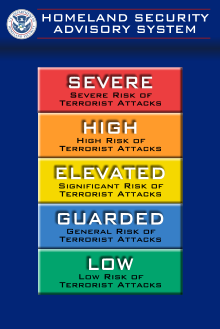
Cheating in all areas of life is something that will always exist. We frown upon cheating. We throw people in jail if they cheat others out of their hard earned money. It is in general a bad thing for someone to get something through trickery or fraud. The problem is that we all cheat to some degree. We try to pay as little taxes as possible. We beef up our resumes. We tell little white lies when the need arises. That is why we have skepticism. We need a homeland-security-esque risk of cheating threat level system.
If Hillary Clinton debates Donald Trump, the threat level for cheating should be high for both candidates. They will cheat by exaggerating their accomplishments and lying about their failures. If you like Hillary you might think that Trump is the only one cheating up there on the stage, and vice versa. If you are a fact checker for the debate you operate under a different belief. Your job is to check what they say and compare that to the facts. That is the most honest person in the mix.
If you are a scientist and your job is to create new drugs, you are operating at a high level risk of cheating. The FDA will serve as the fact checker. Your boss is a different story. Your boss is also under a high level risk of cheating. He or she may have a lot of pressure to get the latest antibody drug to show the kind of data the CEO can show the board at the next meeting. Does this mean you are going to cheat? No. But you might end up on a path that will lead to the termination of your project/job. What does an honest person do under these circumstances?
The last post I put on the blog was about race. Black vs white in America is a high risk of cheating topic. "Hands up don't shoot" was the mantra after the Mike Brown incident in Ferguson MO. It is highly probable that that was an inaccurate description of what took place. Facts not supporting the narrative include a discharged weapon prior to the final lethal shots and the strong armed robbery committed by Brown prior to the incident. At his funeral a friend stated the Mr. Brown was out spreading the word of God prior to his death. That narrative would indeed make everyone skeptical about the police departments conclusion that the officer who shot Mike Brown, Darren Wilson, was defending his life. Who needs to shoot and kill a person out spreading the word of God? The problem is that the facts of the gunshot and robbery have been verified. The preaching has not.
Race is a topic where our Risk of Cheating threat level will be high. Was Mike Brown feeling invincible the day he died or was he out saving souls? That information is not proof positive of anything. It is information that only supports a narrative.
Back to BS - biotech science.
Our narrative is simple. We apply basic research as avenues to treating and/or curing disease. Science is the most honest and pure way of thinking. We set aside our biases and stick only to the facts. Narratives involving our motivations (money, fame, altruism...) are not factors in our scientific method. Those who have chosen to question underlying threats to our honesty are not understanding how science works. That is the big picture narrative behind the benevolence of BS - biotech science. We make drugs to help people because we have dedicated our lives to serve our fellow humans. Just don't bring up the history of that narrative.
Quick example: My favorite cargo cult of Seattle WA, Juno. August 31, 2016: Juno CEO Hans Bishop nets $1.28M from 42,673 shares of his stock. Sept. 8, 2016: Juno stock surges on positive clinical trial data.
The stock dives after four deaths in a trial of 129 patients are reported. It goes from $40-something per share to $20-something. The stock creeps back up to around $30 per share. The CEO socks away a cool million in spite of the narrative pointing to a bright future. Threat level HIGH!
Beware investors! Bullshit level high. Store your capital far from the shores of biotech.
Price is what you pay. Value is what you get. -Warren Buffet
Try not to become a man of success, but rather try to become a man of value. -Albert Einstein
One of my favorite watchdogs of science is Retraction Watch. They have taken a far better path than I to point out the fly in the ointment of scientific research. In our common way of thinking, scientists are the most honest people in the world. Their discoveries have led to all of our modern comforts, including life saving medicines. As a result the general public has come to think of scientists much the same as they used to think of religious figures. If a scientist publishes a paper on his/her work in a scientific journal it must be Gods honest truth. How else could the scientist have gone through such rigorous judgements to get their work accepted? Retraction Watch is not saying how or why. They simply shine a light on the things that scientists and publishers got wrong. And that is a good thing!
Many people choose to criticize the whole concept of pointing out negatives in a positive world such as scientific work. For example, in the recent Tweet "Science Should Be More Boring" the following responses were posted:
True but in today's marketplace it is not very practical. -Elizabeth Leary
Who's gonna pay the bills with boring articles? -Sheila Shakoor
Agree but that will mean fewer science stories. Unsurprising research is less newsworthy. -Simon McGrath
As much as I agree with publishing negative results, the marketing here stinks. Will Dichtel
Now it behooves me, of course, to tell you what they're missing. But it would be just about as difficult to explain to the South Sea Islanders how they have to arrange things so that they get some wealth in their system.
Aerodynamics, to most people, would be considered boring. The thing is, it is pretty damned important in the wealth of our system versus the wealth of the cargo cult system. The fact that civilized societies have useful things like airplanes is due to boring science. It is not boring however to the people who tend to obsess over understanding how things fly. The real question that follows from the above four comments is what is boring and what kind of non-reproducible science is preferable?
If you send an underling into the laboratory to conduct an experiment on the basic science on the Zeka virus, do you allow for that person to bring you results that they feel will best suit their career ambitions? Or do you expect them to present to you a completely transparent and clearly articulated accounting of what took place in the lab? At what point do we allow the above ideas (on practicality, bill paying, newsworthiness and the marketing of science) take precedence?
To link this concept to a real life biotech situation I must bring up the price of Seattle biotech investment and the value that has been returned. It was the marketing that raised the money to pay the price of funding the companies. It was the value created that led to the vast graveyard of failed companies.
If Sheila Shakoor came to me with an idea for a biotech start-up I would have to wonder, does she have good science as a foundation for her new company or has she been focused on paying the bills? If Simon McGrath has 300 publications on his resume should I be concerned about his focus on newsworthy research? As for Elizabeth and Will, I would ask them to stay in their side of the office and leave the science of the company up to the scientists.
The best comment from this tween was from Stephano Tonzani, "My prof of math methods for physicist once said "for researchers, science is boring 364 days of the year."
I do not find any of this boring. What makes science... science? Reproducibility is one way of truly assessing the value of published work. This idea is also one that meets great resistance among career minded scientists. But if you scroll through the latest postings from Retraction Watch you will find this article from Andrew Gelman.
Whatever the vast majority of retractions are, they’re a tiny fraction of the number of papers that are just wrong — by which I mean they present no good empirical evidence for their claims.
As someone who had to use these papers on a daily basis to conduct "newsworthy" research in the field of biopharma, I am far from bored when I read these words. For thirteen years I struggled with non-reproducible research and an inflexible chain of command that insisted the outcomes be true. In order to put wealth into our system we must change the attitude that subjective valuations on boring versus practical is what matters. Boring science can also be non-reproducible useless information. What matters is not the success of getting published. What matters is the value of the published paper.
A cargo cult is an example of how any religion gets started. People see the complexity of the world and they can't accept not knowing how it works. They need answers. Faced with their ignorance they quickly seek anything that they can understand. Gods have always fit the bill. They created the world in which we live. Don't ask any more questions, just worship.
The actual cargo cults want to believe that someday they will have big metal birds delivering their food and medicine. Rather than focus on obtaining these things via the scientific method they take an easier route. To rectify the situation would be simple, at least in the beginning. Talk to the westerners and ask them how they built the airports. Learn that building your own airport is possible, but it is going to take hard work. They have to move from the simple belief system of religion to the complicated understandings of science and technology and progress at understanding the complexity of life on earth.
This clip of Bill Burr letting go of religion demonstrates a couple elements of the biotech cargo cult science. We often hear from the leaders that they cannot find the right people. The people they have to choose from are the ones the industry has educated and trained. They created us and now they want us to have a different skill set! Once again let me pick on Juno Therapeutics.
Hans Bishop, chief executive officer of Juno, said the state (Washington) needs to provide incentives to biotech companies in order to spur growth from existing companies and to attract small and mid-sized biotech companies to the region. Bishop said the state’s talent pool needs to be built up, which will happen through fostering innovation. He said Juno has had to attract more than half of its 300 employees from out of state.
Juno Therapeutics began when Lawrence Corey met David Fallace on a flight from Boston to Seattle. Fallace was in charge of special opportunities for the Alaska Permanent Fund. Ironic that a fund that wishes to be permanent would invest in biotech start-ups. Larry Corey was running the Fred Hutchinson Cancer Research Center. The two formed a partnership that got Juno off the ground.
Larry Corey. He once worked with Gertrude Elion, whom we at the CCS love and admire. At a presentation I attended in Colorado she ended with a slide that had a picture of the path she took in research. It went from chemistry to microbiology to biochemistry to medicine and so on. She was asked by a biochem professor how that path would have been altered if she had had the new technologies that we currently have. She said that it would not have mattered. The real work was done by thinking of the scientific problems and not the human constructs of technology. I'm paraphrasing but I believe her point was that research is a journey that takes you places. If you begin with technology and force it to take you to the land of milk and honey you will never get there. Larry Corey, on the other hand, took what Gertrude Elion had begun and headed off to the cargo cults. His career is in leadership, power, and money. In 1987 Corey directed the AIDS Clinical Trials Group, or ACTG, which conducted pivotal clinical trials confirming the use of the antiretroviral drug AZT to reduce maternal-fetal transmission of HIV and the usefulness of highly active antiretroviral therapy (HAART). Horrible research done without a heart and soul. He has authored 12 books and more than 690 scientific publications. Quantity over quality is a cargo cult career skill. Larry Corey has had one hell of a successful career in the cargo cults.
The "permanent fund" that invested in Juno no longer has Fallace and Corey to develop their idea. They have both moved on to other things. One has to wonder why anyone would leave such a promising narrative? Leadership in the cargo cults however requires one to keep moving. You don't want to be around when the followers look up to the skies to see once again that the planes will not be coming. The new leaders of Juno have already laid the foundation for failure. The state of Washington is somehow obstructing their ability to attract the right talent. "Washington state's talent pool needs to be built up, which will happen through fostering innovation." Has Corey innovated? The problems he set out to solve are now being left to people who must emerge from a talent pool that has not yet been built by our leaders. They need government money first!
The talent pool that currently exists in Seattle consists of ex-employees of the cargo cult companies that have come and gone. Resumes of people in Seattle life sciences include the companies that leave many an investor with a bad taste. Bad science is not sustainable nor is a talent pool that comes from such companies. The people naturally change their ideas on how to maintain employment. Like Lawrence Corey, they seek to distance themselves from the situation that makes science fun. That moment you go into the lab in the morning to see how your experiment turned out. The anticipation that your work is leading to bigger and better things. The confidence of mastering skills that once took so much of your time. The talent pool that innovates does not exist in Seattle. But unlike Bill Burr letting his religion go, it is the cargo cults that let their people go. The narrative lives on even though there is no talent to validate.
The problems facing life in the life sciences is daunting. Those who wish to have a career discovering new biotechnologies and helping mankind will soon run up against the need for survival. The likes of Lawrence Corey will be your competition. He, along with the other leaders of Seattle life sciences, have created a talent pool that is not good enough for their latest narratives. My advice to the young scientists is to stay away from biopharma, medical science and the gurus who start companies who seek massive profit. Develop technology, not drugs. Let go of the religion of western medicine. Biotechnology does not have to be synonymous with pharmaceuticals.
Forbes had an article in their February issue called "Solving Pharma's Shkreli Problem". The subtitle, "The most hated entrepreneur in America did a public service in some ways: he revealed a fundamentally flawed system that threatens an entire industry".
My investors expect me to maximize profits. Not to minimize them or go half or 70% but to go 100% of the profit curve. -Martin Shkreli
This is a logical statement for any C level executive in Biopharma. They are not put in place to make wise scientific decisions. That is the task of lower ranking members of a biopharma company. C level execs are put in place to turn a profit for the investors. On one hand this works. Without profit or the promise or illusion of profit, no one has a job. Gone are the days where we had people like George W. Merck.
We try never to forget that medicine is for the people. It is not for the profits. The profits follow, and if we have remembered that, they have never failed to appear. The better we have remembered it, the larger they have been.
— George W(ilhelm) Merck
How prevalent are the Shkreli types in biopharma? We know that he did not operate in a vacuum. He had a board of directors. He had investors communicating with him daily. He also had counterparts at Valeant. As the Forbes article points out;
Shkreli had learned about price hikes by watching his elders. In 2007 a mechanical engineer and former defense chief executive named Don Baily took over Questor Pharmaceuticals and raised the price of a drug used to treat seizures in infants, Acthar Gel, from $50 to $28,000 a vial, and then marked it for diseases like multiple sclerosis where there was limited evidence it worked. Quester was sold to Dublin-based Mallinchrodt for $5.6 billion in 2014.
So we really ought to look into theories that don't work, and science that isn't science... Who told Forbes that Acthar Gel had limited evidence that it worked in treating multiple sclerosis? Where is the scientific publication that takes on the scientific claims both positive and negative against a drugs efficacy? It doesn't specifically exist. We have science journals. We have people who work as scientists and communicate much better than the average person. But they do not outrank the likes of Shkreli and Baily. They live perilous lives searching for a livelihood within organizations like Valiant and Mallinchrodt. They cannot rock the boat. Medicine is for the profits.
From Forbes:
In 2005 a banker named Steven Harr pointed out that the only barriers to sky-high prices for cancer drugs were pharma "companies" goodwill and tolerance for adverse publicity" but warned his clients that they risked subjecting the industry to increased regulation and quite possibly price controls. (Harr is now the chief financial officer of Seattle biotech Juno Therapeutics.)
Steven Harrs career is typical of biopharma executives. He was educated in science but quickly turned towards the money. His bio on the Juno website states that he joined Juno in April 2014. Previously he was Managing Director and Head of Biotechnology Investment Banking at Morgan Stanley from May 2010 until he joined Juno. Prior to his investment banking role at Morgan Stanley, Dr. Harr was Morgan Stanley’s lead biotech research analyst and Co-Head of Global Healthcare Research. Dr. Harr received a B.A. in Economics from College of the Holy Cross and an M.D. from The Johns Hopkins University School of Medicine. Dr. Harr was a resident in internal medicine at the University of California, San Francisco.
Johns Hopkins! UCSF!!! Banker?
The likes of Steven Harr could have been a force for good. He could have been one of those looking after our interests in medicine. Instead he is now a top level executive at the Dendreon spinoff Juno. Not as their CSO or CMO but their CFO! Ironically the mistakes of Dendron have proven that Steven Harr was wrong about drug pricing. Dendreon priced their dubiously efficacious product/service way too high and they ended up filing for bankruptcy. While Dendreon lacked the public arrogance of Martin Shkreli, they share his philosophy on drug pricing. They know that the investors want them to go after 100% of the potential profits. Having stumbled badly with Dendreon and the high price of Provenge, they are now ready to take another shot at making money off of their biotechnology.
RESPONSIBILITIES
Innovate and conceptually solve problems through the power of excellent storytelling.
Integrate narratives utilizing film, books, television, retail and emerging web entertainment.
Collaborate with the creative team on most projects.
REQUIREMENTS
Bachelor's Degree from a top tier university with solid journalistic/creative/marketing credentials.
3+ years of experience as junior copywriter/screenwriter in a creative environment advertising agency, studio, freelance writer, graphic design firm, etc. with experience working on narrative driven projects, both professionally and personally.
Strong knowledge of Microsoft word.
Demonstrate a high level of initiative and ability to function superbly in both individual and team environments.
Handle stressful situations and deadline pressures well.
Team-oriented and collaborative idea building skills are a must.
Bold experimentation in different styles of writing and communications are a must.
The book I am writing is tentatively titled, "The History of the Narrative". When I thought about the biggest difficulties facing real science and the cargo cult mentality within biopharma, it always came down to "the best story". As former Amgen scientist C. Glen Begley discovered:
Part way through his project to reproduce promising studies, Begley met for breakfast at a cancer conference with the lead scientist of one of the problematic studies.
"We went through the paper line by line, figure by figure," said Begley. "I explained that we re-did their experiment 50 times and never got their result. He said they'd done it six times and got this result once, but put it in the paper because it made the best story. It's very disillusioning."
Such selective publication is just one reason the scientific literature is peppered with incorrect results. -Sharon Begley, Reuters
The narrative of the cargo cults of biopharma always seeks the best story. Contrast this with real science being restricted to only telling true stories. This job description from Theranos is either an example of the cargo cult "best story" problem or just a poorly worded ad for a marketing specialist.
The danger to the rest of us is the fact that Theranos is selling itself as a tool of the healthcare industry. The narrative they are putting forth can be found in their mission statement, "Our mission is to make actionable information accessible to everyone at the time it matters. By making actionable information accessible to everyone in the world at the time it matters most, we are working to facilitate the early detection and prevention of disease, and empower people everywhere to live their best possible lives." If there is any creativity from a top tier University B.Sc. found in the actionable information concerning the detection and prevention of disease, then we have a problem. Hopefully the writer would only be used to help spin the story about Theranos and their many scandals.
A very simple test on the Theranos product was shown here. Such a random sampling is so simple. In this piece Jean-Louis Gassée, a former director of engineering at Apple who is "compulsively curious" compared the Theranos narrative to reality. Using an alternative blood testing service Jean-Louis came up with some data. He contacted Theranos with his findings and received no response.
For a $9+ billion company that has the federal government on its board of directors, the hiring of an undergrad as a spin doctor seems crazy. Where in the massive dung heap of BS does the new guy enter? How many "creative storytellers" within Theranos have been brought in before him/her? What did their job description look like?
It is easy to envision how a community of scholars should be organized. Every idea would be taken on its merits, and every person judged on the worth of his ideas. The need for a social hierarchy would be strictly limited. Each member of the community would enjoy status that was determined by merit and that owed nothing to social standing or any other personal attribute. Elite group[s might appear temporarily but would never outlast the original reason for their existence. -Betrayers of the Truth, Chapter 8, Power of thew Elite -William Broad and Nicholas Wade
In a world where social hierarchy is strictly limited, why would a scientist withhold data? To gain notoriety a scientist must get his/her work published. That means communicating with the rest of the community. Communication is the purvey of the bullshit artist. Scientists write up their papers according to the structure required. Somehow the required structure of the scientific paper has evolved to excise meaningful data. One possible explanation is that those who are now in charge were once up and coming researchers. They knew the perils of data sharing to their careers. Now, as leaders, they have opened up the path to more creative narratives. Science took the hit and careerists had way around the old fashioned rigors of science.
But there is one feature I notice that is generally missing in Cargo Cult Science. That is the idea that we all hope you have learned in studying science in school—we never explicitly say what this is, but just hope that you catch on by all the examples of scientific investigation. It is interesting, therefore, to bring it out now and speak of it explicitly. It’s a kind of scientific integrity, a principle of scientific thought that corresponds to a kind of utter honesty—a kind of leaning over backwards. For example, if you’re doing an experiment, you should report everything that you think might make it invalid—not only what you think is right about it: other causes that could possibly explain your results; and things you thought of that you’ve eliminated by some other experiment, and how they worked—to make sure the other fellow can tell they have been eliminated.
Scientific integrity, the layman might assume, means operating in the ideal world described above. The world where ideas are judged on their merits and not by the pedigree of the originator. Scientific integrity, the layman might assume, means that the leaders of the scientific community require their underlings to report everything, good and bad. Yet the scientific paper has evolved to the point where the actual data that supports the conclusions is top secret. And the rest of us do not have the proper clearance.
AllTrials is an organization that sees the problem and seeks to do something about it. AllTrials has targeted the pharmaceutical industry and their clinical trial data. Another scientist pursuing data transparency is Harlan Krumholz. Please read his article and listen to the NPR interview.
Data sharing is knowledge sharing. It is the same concept of forming a university where we share knowledge with intelligent young people in hopes that they will further the knowledge. Dr. Krumholz says
Among the first things we learn in school are to share and to show our work. This lesson has been lost on medicine for many years. The medical editors are reminding us that we scientists have a principal responsibility to society and to those who agreed to participate in our studies.
After the company terminates the 19 employees it plans to, TetraLogic will be left with 10 employees, the Journal said. Among those terminated are G. Glenn Begley, the company’s chief scientific officer, and Lesley Russell, the company’s chief operating officer. Their termination will occur on April 19, the Journal reported.
When Begley and Ellis wrote their paper on the difficulties of using bad science as a foundation for ones research they were acknowledging that there was a problem. Not everything we read in the journals is true. Some say most of it is not true. If you work in the biopharma industry you know that job of yours is contingent upon the success of the molecule on which you are working. If it does not perform according to the narrative of the company, you might be tossed out the door along with the project. Even if your job is to simply clone, grow, purify, define biochemically the molecule, you will be packing up your belongings from your cubicle if the molecule does not succeed in the clinical trials.
TetraLogic had a plan. Birinapant was to be a treatment for high-risk patients with myelodysplastic syndromes. However, phase II trial results showed birinapant did not demonstrate any clinical benefit over placebo. The study has been terminated, and C Glen Begleys job has been terminated. So has 18 other individuals including the COO/CMO! Was that a part of their plan? Were the leaders upfront about the connection between everyones job and the outcome of the phase II trials of birinapant?
Of course the CSO and CO/MO are a part of the leadership. They make the decisions and serve as spokesmen/women for the narratives of the company. Scientifically they had to have reason to believe that birinipant would succeed but I doubt they were betting their jobs on it.
Birinapant is designed to mimic the activity of an endogenous protein, the Second Mitochondrial Activator of Caspases, or SMAC, which is involved in the regulation of the apoptotic process within cells. Avoidance of apoptosis is a critical step in cancer tumor development and certain infectious diseases. Birinapant reactivates one of the common apoptotic pathways, thus restoring the natural balance in our bodies. This is a completely novel approach to treating these diseases and may provide new treatment options for patients suffering from cancer or serious infectious disease. The company is reviewing its strategic alternatives in light of the birinapant clinical trial results announced on January 6, 2016.
To add a little more detail to the scientific knowledge of SMAC for us laymen:
Myelodysplastic syndromes are a group of cancers in which immature blood cells in the bone marrow do not mature or become healthy blood cells. In patients diagnosed with myelodysplastic syndrome, the “blood stem cells (immature cells) do not become mature red blood cells, white blood cells, or platelets in the bone marrow. These immature blood cells, called blasts, do not work the way they should and either die in the bone marrow or soon after they go into the blood. This leaves less room for healthy white blood cells, red blood cells, and platelets to form in the bone marrow. When there are fewer healthy blood cells, infection, anemia, or easy bleeding may occur,” according to a report on cancer.gov.
So birinapant was suppose to fine tune apoptosis of blasts which would make proper room for healthy white/red blood cells and platelets to form in the bone marrow. That was the narrative. Once the fine tuning was accomplished by birinapant the disease state would no longer bedevil the patient. It worked as well as, but no better than a placebo.
The cynefin method of thinking would have helped the people who lost their jobs.
All biopharma research projects have a narrative that states molecule X will cure or treat disease Y. Biotechnology works. It operates in the known knowns area after the known unknowns are dealt with. Does birinapant properly mimic SMAC. That was a science/technology project that succeeded and that is the job of the scientific staff at TetraLogic. Then came the unknown unknown. Will birinapant go into the body, find its way to where SMAC was lacking and properly restore the function of the endogenous protein? When the narrative went from known unknown (SMAC is lacking and birinapant will fix the problem) to unknown unknown (will birinapant solve the problem?) and then to known unknown (birinipant will not fix the problem of SMAC deficiency) the project was deemed a failure and jobs were shed.
That is how it works. Even an honest man such as C Glen Begley is not immune to this dilemma. Everyone working in science must admit that they are not going to get it right every time. The most perilous place to be is on the scientific frontline when the results come in.