Saturday, December 31, 2016

Saturday, December 03, 2016
History of the Narrative
The narrative, as defined by Wikipedia, is "any report of connected events, real or imaginary, presented in a sequence of written or spoken words, and/or still or moving images." Bullshit is defined as, "is mostly a slang profanity term meaning "nonsense", especially as a rebuke in response to communication or actions viewed as deceptive, misleading, disingenuous, unfair or false." Communicating ones scientific research is a narrative. It becomes BS when the communicators are deceptive, misleading and so on.
OK. Serepta offered up a narrative to the FDA. The FDA told the rest of us that Sereptas narrative was not BS and approved the drug. Some disagreed. We covered that in the last post and time will let us know if the Serepta narrative is BS or not. In fact it seems that Janet Woodcocks approach was to approve the drug to find out. It's not the best way forward and here is why.
Juno!
I've talked the fateful airplane trip that introduced Lawrence Corey of the Fred Hutchinson Cancer Research Center with David Fallace of the Alaska Permanent Fund. These two got Juno off the ground leaving the details to be filled in by the cargo cult scientists of Seattle. The unemployed tribesmen were gathered and put back into the watch towers with their coconut and stick antenna headsets. Once again they fired up the ceremonies of another biotech pharmaceutical company. The end result is death and destruction.
It is a very interesting scientific development. Unlike the DNA manipulation that is the narrative of Sereptas Exondys 5, something very powerful is happening with Junos JCAR015. In July of this year the clinical trial known as ROCKET was put on hold after two patients died from a cerebral edema. The deaths were attributed to a protocol change (cargo cult alert!) that added fludarabine (chemotherapy) to the treatment. Juno convinced the FDA that fludarabine caused the deaths and the FDA let them continue on. The cold hard reality cut into that narrative. Since restarting the ROCKET trial 12 patients have been tested. two more patients have died of the same issue, cerebral edema. Take away the emotion of judging the FDA and Juno. What is happening? What would the mechanism of action be with CAR-T therapy directed at CD19 in patients with B Cell Acute Lymphoblastic Leukemia (B-ALL)?
In a Utopian world we would set a team of scientist on the case. What is happening. In the cargo cults we tend to focus on getting the endpoints (the cargo) we want. When we don't get them we try other avenues without understanding the basic science. We pursue the narrative even when BS has presented itself. Brian Orelli of Motley Fool pointed out, "Fortunately, Juno has other CAR-T cancer treatments, JCAR014 and JCAR017, in particular, which appear to be safer, and JCAR015 might still be useful in patients with other blood cancers, such as non-Hodgkin lymphoma. While this issue may be specific to JCAR015 and late-stage ALL, investors in Bellicum Pharmaceuticals, Kite Pharma, and Bluebird should keep in mind that CAR-T is largely uncharted territory that could result in other unanticipated issues with their treatments."
So we keep on keeping on and wait to see who else dies. The patients are in bad condition coming into the trials. This is a part of the bigger problem of treating end of life conditions as diseases we can cure. This is a narrative and it is BS. People being turned into patients for biopharma greed is what we are witnessing. If Juno, Bellicum, Kite and Bluebird can statistically demonstrate longer life (quality of life is not an issue) they can make money. So far Juno has demonstrated the opposite.
Friday, November 04, 2016
Wednesday, September 21, 2016
Sereptas Cargo Plane Has Landed
“there were serious methodological concerns identified by FDA,” according to the documents.
To measure the drug’s effect on muscle function, the company performed a six-minute walk test on the trial’s participants. The FDA reports there was “no nominally significant difference” between patients taking either the higher dose of eteplirsen, the lower dose or the placebo. The agency also griped about the fact that the company chose to compare the performance of the patients on the six-minute walk test against “historical controls,” or DMD patients who were in different trials in the past. - Forbes
You can read all about the "serious methodological concerns" here.
The simple description of Sereptas plan to demonstrate the efficacy of their product:
1) expression of an altered messenger RNA in muscle (pharmacodynamic)
2) production of dystrophin protein in muscle (pharmacodynamic)
3) improvement or preservation of muscle function (clinical).
Throughout the approval process, critics have expressed concerns with the small population — 12 patients — involved in clinical trials for the rare disease, along with flaws in how the clinical study was designed. These factors make “judgment on science difficult,” Califf (the FDA commissioner) said.
No it doesn't. More data points lead to better understanding of the accuracy of what is being measured. It is simple precision and accuracy. You may leave college with a poor grasp of the math behind statistics but you get the concept. The more data points the clearer the picture gets. Poor precision leads to greater doubts about accuracy. You aren't making a "judgment on science" that is "difficult". You are doing math.
Here is an example of data on the production of dystrophin protein in muscle.
Western blots and immunofluorescence were used to quantitate dystrophin.
Table 2: Applicant’s Quantification of Dystrophin by Western Blot and Immunofluorescence Analyses
Patient Western Blot % of normal Immunofluorescence % positive fibers
A 2.05 18.5
B 1.15 19.1
C 0.38 33.5
D 1.62 24.0
E 0.52 21.5
F 0.98 12.8
G 0 7.1
H 2.47 20.7
I 0.96 28.2
J 0 1.4
L 0.14 4.5
A quick glance at Figure 1: Correlation between Two Methods Used to Quantify Dystrophin in Skeletal Muscle: Patients from Study 201/202 tells you all you need to know. As the FDA put it, "Of note, the correlation between the two independent methods used to quantify dystrophin in muscle samples was weak." They also stated, "As discussed above, we believe that immunofluorescence analysis (percent positive fibers) is not a reliable method to quantify dystrophin content." What other criticisms of Sereptas methodology did the FDA panel mention?
Regarding the first pharmacodynamic goal, to demonstrate expression of an altered mRNA in muscle the FDA states;
Because even a minimal PCR signal is interpreted as “positive,” this biomarker provides little support of efficacy for eteplirsen; it does provide evidence that eteplirsen causes at least some degree of exon 51 skipping, as intended.
Regarding the second pharmacodynamic goal, the demonstrate production of dystrophin protein in muscle the FDA states;
FDA conducted an inspection of the facility where the data reported in the publication were generated. Significant methodological concerns were identified, which cast serious doubt on the reliability of assessments from the first three biopsies.and
Thus, the review team does not consider “percent dystrophin‐positive fibers” to be a meaningful way to estimate dystrophin content, and we believe the results reported by the applicant on this measure do not establish that a significant increase in dystrophin occurred in response to eteplirsen treatmentand
In any case, the level of dystrophin was 0.9% of normal after 3.5 years, such that, in absolute terms, the increase from baseline would be, at most, 0.9%, assuming a “worst case” for untreated patients, i.e., zero dystrophin.
Regarding the clinical goal, improvement or preservation of muscle function, the FDA stated;
Two patients in the 30 mg/kg group became unable to ambulate soon after the study start. The applicant then pooled the six remaining eteplirsen patients and compared them to the four placebo patients, an unplanned post hoc analysis. No nominally significant difference between eteplirsen and placebo was identified in that post hoc analysis.and
The applicant conducted a number of additional post hoc analyses, comparing the 6 patients who received eteplirsen in the 24‐week double‐blind phase of Study 201 and could still ambulate at the end of Study 201 (and continued on open‐label eteplirsen in Study 202) to those originally treated with placebo in the double‐blind phase of Study 201, and later switched to open‐label eteplirsen.
The applicant conducted a post hoc comparison of the patients in Study 201/202 to data from the “Italian DMD Registry” and the “Leuven Neuromuscular Reference Center” registry.
The problems of externally‐controlled studies are well recognized.
Dr. Ronald Farkas, who led the FDAs clinical team in the neurology products division, suddenly departed the agency just before the approval of Exondys 51. The arguments for the governments approval of Exondys 51 not come in a highly detailed document such as the one Dr. Farkas and his team presented.
Both FDA camps had “exercised reasonable scientific judgment,” Califf found, adding that it’s “exceedingly rare” to overrule a decision by the director of the Center for Drug Evaluation and Research. Without any additional technical expertise of his own, Califf said, he deferred to CDER Director Dr. Janet Woodcock.An appeal to the authority of someone elses knowledge!
The jury is still out. Serepta still has to put up or shut up. The FDA has just bought them some time and money. How much money? $300,000 per year. Good grief. With BS artists like these, who needs scientists anymore?
Sunday, September 11, 2016
Risk of Cheating Barometer
Cheating in all areas of life is something that will always exist. We frown upon cheating. We throw people in jail if they cheat others out of their hard earned money. It is in general a bad thing for someone to get something through trickery or fraud. The problem is that we all cheat to some degree. We try to pay as little taxes as possible. We beef up our resumes. We tell little white lies when the need arises. That is why we have skepticism. We need a homeland-security-esque risk of cheating threat level system.

If Hillary Clinton debates Donald Trump, the threat level for cheating should be high for both candidates. They will cheat by exaggerating their accomplishments and lying about their failures. If you like Hillary you might think that Trump is the only one cheating up there on the stage, and vice versa. If you are a fact checker for the debate you operate under a different belief. Your job is to check what they say and compare that to the facts. That is the most honest person in the mix.
If you are a scientist and your job is to create new drugs, you are operating at a high level risk of cheating. The FDA will serve as the fact checker. Your boss is a different story. Your boss is also under a high level risk of cheating. He or she may have a lot of pressure to get the latest antibody drug to show the kind of data the CEO can show the board at the next meeting. Does this mean you are going to cheat? No. But you might end up on a path that will lead to the termination of your project/job. What does an honest person do under these circumstances?
The last post I put on the blog was about race. Black vs white in America is a high risk of cheating topic. "Hands up don't shoot" was the mantra after the Mike Brown incident in Ferguson MO. It is highly probable that that was an inaccurate description of what took place. Facts not supporting the narrative include a discharged weapon prior to the final lethal shots and the strong armed robbery committed by Brown prior to the incident. At his funeral a friend stated the Mr. Brown was out spreading the word of God prior to his death. That narrative would indeed make everyone skeptical about the police departments conclusion that the officer who shot Mike Brown, Darren Wilson, was defending his life. Who needs to shoot and kill a person out spreading the word of God? The problem is that the facts of the gunshot and robbery have been verified. The preaching has not.
Race is a topic where our Risk of Cheating threat level will be high. Was Mike Brown feeling invincible the day he died or was he out saving souls? That information is not proof positive of anything. It is information that only supports a narrative.
Back to BS - biotech science.
Our narrative is simple. We apply basic research as avenues to treating and/or curing disease. Science is the most honest and pure way of thinking. We set aside our biases and stick only to the facts. Narratives involving our motivations (money, fame, altruism...) are not factors in our scientific method. Those who have chosen to question underlying threats to our honesty are not understanding how science works. That is the big picture narrative behind the benevolence of BS - biotech science. We make drugs to help people because we have dedicated our lives to serve our fellow humans. Just don't bring up the history of that narrative.
Quick example: My favorite cargo cult of Seattle WA, Juno. August 31, 2016: Juno CEO Hans Bishop nets $1.28M from 42,673 shares of his stock. Sept. 8, 2016: Juno stock surges on positive clinical trial data.
The stock dives after four deaths in a trial of 129 patients are reported. It goes from $40-something per share to $20-something. The stock creeps back up to around $30 per share. The CEO socks away a cool million in spite of the narrative pointing to a bright future. Threat level HIGH!
Beware investors! Bullshit level high. Store your capital far from the shores of biotech.
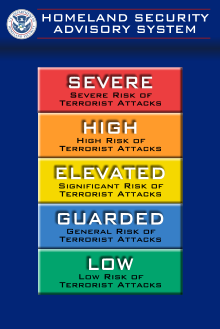
If Hillary Clinton debates Donald Trump, the threat level for cheating should be high for both candidates. They will cheat by exaggerating their accomplishments and lying about their failures. If you like Hillary you might think that Trump is the only one cheating up there on the stage, and vice versa. If you are a fact checker for the debate you operate under a different belief. Your job is to check what they say and compare that to the facts. That is the most honest person in the mix.
If you are a scientist and your job is to create new drugs, you are operating at a high level risk of cheating. The FDA will serve as the fact checker. Your boss is a different story. Your boss is also under a high level risk of cheating. He or she may have a lot of pressure to get the latest antibody drug to show the kind of data the CEO can show the board at the next meeting. Does this mean you are going to cheat? No. But you might end up on a path that will lead to the termination of your project/job. What does an honest person do under these circumstances?
The last post I put on the blog was about race. Black vs white in America is a high risk of cheating topic. "Hands up don't shoot" was the mantra after the Mike Brown incident in Ferguson MO. It is highly probable that that was an inaccurate description of what took place. Facts not supporting the narrative include a discharged weapon prior to the final lethal shots and the strong armed robbery committed by Brown prior to the incident. At his funeral a friend stated the Mr. Brown was out spreading the word of God prior to his death. That narrative would indeed make everyone skeptical about the police departments conclusion that the officer who shot Mike Brown, Darren Wilson, was defending his life. Who needs to shoot and kill a person out spreading the word of God? The problem is that the facts of the gunshot and robbery have been verified. The preaching has not.
Race is a topic where our Risk of Cheating threat level will be high. Was Mike Brown feeling invincible the day he died or was he out saving souls? That information is not proof positive of anything. It is information that only supports a narrative.
Back to BS - biotech science.
Our narrative is simple. We apply basic research as avenues to treating and/or curing disease. Science is the most honest and pure way of thinking. We set aside our biases and stick only to the facts. Narratives involving our motivations (money, fame, altruism...) are not factors in our scientific method. Those who have chosen to question underlying threats to our honesty are not understanding how science works. That is the big picture narrative behind the benevolence of BS - biotech science. We make drugs to help people because we have dedicated our lives to serve our fellow humans. Just don't bring up the history of that narrative.
Quick example: My favorite cargo cult of Seattle WA, Juno. August 31, 2016: Juno CEO Hans Bishop nets $1.28M from 42,673 shares of his stock. Sept. 8, 2016: Juno stock surges on positive clinical trial data.
The stock dives after four deaths in a trial of 129 patients are reported. It goes from $40-something per share to $20-something. The stock creeps back up to around $30 per share. The CEO socks away a cool million in spite of the narrative pointing to a bright future. Threat level HIGH!
Beware investors! Bullshit level high. Store your capital far from the shores of biotech.
Sunday, May 22, 2016
Should Science Be More Boring?
Price is what you pay. Value is what you get. -Warren Buffet
Try not to become a man of success, but rather try to become a man of value. -Albert Einstein
One of my favorite watchdogs of science is Retraction Watch. They have taken a far better path than I to point out the fly in the ointment of scientific research. In our common way of thinking, scientists are the most honest people in the world. Their discoveries have led to all of our modern comforts, including life saving medicines. As a result the general public has come to think of scientists much the same as they used to think of religious figures. If a scientist publishes a paper on his/her work in a scientific journal it must be Gods honest truth. How else could the scientist have gone through such rigorous judgements to get their work accepted? Retraction Watch is not saying how or why. They simply shine a light on the things that scientists and publishers got wrong. And that is a good thing!
Many people choose to criticize the whole concept of pointing out negatives in a positive world such as scientific work. For example, in the recent Tweet "Science Should Be More Boring" the following responses were posted:
True but in today's marketplace it is not very practical. -Elizabeth Leary
Who's gonna pay the bills with boring articles? -Sheila Shakoor
Agree but that will mean fewer science stories. Unsurprising research is less newsworthy. -Simon McGrath
As much as I agree with publishing negative results, the marketing here stinks. Will Dichtel
Aerodynamics, to most people, would be considered boring. The thing is, it is pretty damned important in the wealth of our system versus the wealth of the cargo cult system. The fact that civilized societies have useful things like airplanes is due to boring science. It is not boring however to the people who tend to obsess over understanding how things fly. The real question that follows from the above four comments is what is boring and what kind of non-reproducible science is preferable?
If you send an underling into the laboratory to conduct an experiment on the basic science on the Zeka virus, do you allow for that person to bring you results that they feel will best suit their career ambitions? Or do you expect them to present to you a completely transparent and clearly articulated accounting of what took place in the lab? At what point do we allow the above ideas (on practicality, bill paying, newsworthiness and the marketing of science) take precedence?
To link this concept to a real life biotech situation I must bring up the price of Seattle biotech investment and the value that has been returned. It was the marketing that raised the money to pay the price of funding the companies. It was the value created that led to the vast graveyard of failed companies.
If Sheila Shakoor came to me with an idea for a biotech start-up I would have to wonder, does she have good science as a foundation for her new company or has she been focused on paying the bills? If Simon McGrath has 300 publications on his resume should I be concerned about his focus on newsworthy research? As for Elizabeth and Will, I would ask them to stay in their side of the office and leave the science of the company up to the scientists.
The best comment from this tween was from Stephano Tonzani, "My prof of math methods for physicist once said "for researchers, science is boring 364 days of the year."
I do not find any of this boring. What makes science... science? Reproducibility is one way of truly assessing the value of published work. This idea is also one that meets great resistance among career minded scientists. But if you scroll through the latest postings from Retraction Watch you will find this article from Andrew Gelman.
Try not to become a man of success, but rather try to become a man of value. -Albert Einstein
One of my favorite watchdogs of science is Retraction Watch. They have taken a far better path than I to point out the fly in the ointment of scientific research. In our common way of thinking, scientists are the most honest people in the world. Their discoveries have led to all of our modern comforts, including life saving medicines. As a result the general public has come to think of scientists much the same as they used to think of religious figures. If a scientist publishes a paper on his/her work in a scientific journal it must be Gods honest truth. How else could the scientist have gone through such rigorous judgements to get their work accepted? Retraction Watch is not saying how or why. They simply shine a light on the things that scientists and publishers got wrong. And that is a good thing!
Many people choose to criticize the whole concept of pointing out negatives in a positive world such as scientific work. For example, in the recent Tweet "Science Should Be More Boring" the following responses were posted:
True but in today's marketplace it is not very practical. -Elizabeth Leary
Who's gonna pay the bills with boring articles? -Sheila Shakoor
Agree but that will mean fewer science stories. Unsurprising research is less newsworthy. -Simon McGrath
As much as I agree with publishing negative results, the marketing here stinks. Will Dichtel
Now it behooves me, of course, to tell you what they're missing. But it would be just about as difficult to explain to the South Sea Islanders how they have to arrange things so that they get some wealth in their system.
Aerodynamics, to most people, would be considered boring. The thing is, it is pretty damned important in the wealth of our system versus the wealth of the cargo cult system. The fact that civilized societies have useful things like airplanes is due to boring science. It is not boring however to the people who tend to obsess over understanding how things fly. The real question that follows from the above four comments is what is boring and what kind of non-reproducible science is preferable?
If you send an underling into the laboratory to conduct an experiment on the basic science on the Zeka virus, do you allow for that person to bring you results that they feel will best suit their career ambitions? Or do you expect them to present to you a completely transparent and clearly articulated accounting of what took place in the lab? At what point do we allow the above ideas (on practicality, bill paying, newsworthiness and the marketing of science) take precedence?
To link this concept to a real life biotech situation I must bring up the price of Seattle biotech investment and the value that has been returned. It was the marketing that raised the money to pay the price of funding the companies. It was the value created that led to the vast graveyard of failed companies.
If Sheila Shakoor came to me with an idea for a biotech start-up I would have to wonder, does she have good science as a foundation for her new company or has she been focused on paying the bills? If Simon McGrath has 300 publications on his resume should I be concerned about his focus on newsworthy research? As for Elizabeth and Will, I would ask them to stay in their side of the office and leave the science of the company up to the scientists.
The best comment from this tween was from Stephano Tonzani, "My prof of math methods for physicist once said "for researchers, science is boring 364 days of the year."
I do not find any of this boring. What makes science... science? Reproducibility is one way of truly assessing the value of published work. This idea is also one that meets great resistance among career minded scientists. But if you scroll through the latest postings from Retraction Watch you will find this article from Andrew Gelman.
Whatever the vast majority of retractions are, they’re a tiny fraction of the number of papers that are just wrong — by which I mean they present no good empirical evidence for their claims.As someone who had to use these papers on a daily basis to conduct "newsworthy" research in the field of biopharma, I am far from bored when I read these words. For thirteen years I struggled with non-reproducible research and an inflexible chain of command that insisted the outcomes be true. In order to put wealth into our system we must change the attitude that subjective valuations on boring versus practical is what matters. Boring science can also be non-reproducible useless information. What matters is not the success of getting published. What matters is the value of the published paper.
Sunday, April 10, 2016
Born Sick, Commanded to Be Well
A cargo cult is an example of how any religion gets started. People see the complexity of the world and they can't accept not knowing how it works. They need answers. Faced with their ignorance they quickly seek anything that they can understand. Gods have always fit the bill. They created the world in which we live. Don't ask any more questions, just worship.
The actual cargo cults want to believe that someday they will have big metal birds delivering their food and medicine. Rather than focus on obtaining these things via the scientific method they take an easier route. To rectify the situation would be simple, at least in the beginning. Talk to the westerners and ask them how they built the airports. Learn that building your own airport is possible, but it is going to take hard work. They have to move from the simple belief system of religion to the complicated understandings of science and technology and progress at understanding the complexity of life on earth.
This clip of Bill Burr letting go of religion demonstrates a couple elements of the biotech cargo cult science. We often hear from the leaders that they cannot find the right people. The people they have to choose from are the ones the industry has educated and trained. They created us and now they want us to have a different skill set! Once again let me pick on Juno Therapeutics.
Hans Bishop, chief executive officer of Juno, said the state (Washington) needs to provide incentives to biotech companies in order to spur growth from existing companies and to attract small and mid-sized biotech companies to the region. Bishop said the state’s talent pool needs to be built up, which will happen through fostering innovation. He said Juno has had to attract more than half of its 300 employees from out of state.
Juno Therapeutics began when Lawrence Corey met David Fallace on a flight from Boston to Seattle. Fallace was in charge of special opportunities for the Alaska Permanent Fund. Ironic that a fund that wishes to be permanent would invest in biotech start-ups. Larry Corey was running the Fred Hutchinson Cancer Research Center. The two formed a partnership that got Juno off the ground.
Larry Corey. He once worked with Gertrude Elion, whom we at the CCS love and admire. At a presentation I attended in Colorado she ended with a slide that had a picture of the path she took in research. It went from chemistry to microbiology to biochemistry to medicine and so on. She was asked by a biochem professor how that path would have been altered if she had had the new technologies that we currently have. She said that it would not have mattered. The real work was done by thinking of the scientific problems and not the human constructs of technology. I'm paraphrasing but I believe her point was that research is a journey that takes you places. If you begin with technology and force it to take you to the land of milk and honey you will never get there. Larry Corey, on the other hand, took what Gertrude Elion had begun and headed off to the cargo cults. His career is in leadership, power, and money. In 1987 Corey directed the AIDS Clinical Trials Group, or ACTG, which conducted pivotal clinical trials confirming the use of the antiretroviral drug AZT to reduce maternal-fetal transmission of HIV and the usefulness of highly active antiretroviral therapy (HAART). Horrible research done without a heart and soul. He has authored 12 books and more than 690 scientific publications. Quantity over quality is a cargo cult career skill. Larry Corey has had one hell of a successful career in the cargo cults.
The "permanent fund" that invested in Juno no longer has Fallace and Corey to develop their idea. They have both moved on to other things. One has to wonder why anyone would leave such a promising narrative? Leadership in the cargo cults however requires one to keep moving. You don't want to be around when the followers look up to the skies to see once again that the planes will not be coming. The new leaders of Juno have already laid the foundation for failure. The state of Washington is somehow obstructing their ability to attract the right talent. "Washington state's talent pool needs to be built up, which will happen through fostering innovation." Has Corey innovated? The problems he set out to solve are now being left to people who must emerge from a talent pool that has not yet been built by our leaders. They need government money first!
The talent pool that currently exists in Seattle consists of ex-employees of the cargo cult companies that have come and gone. Resumes of people in Seattle life sciences include the companies that leave many an investor with a bad taste. Bad science is not sustainable nor is a talent pool that comes from such companies. The people naturally change their ideas on how to maintain employment. Like Lawrence Corey, they seek to distance themselves from the situation that makes science fun. That moment you go into the lab in the morning to see how your experiment turned out. The anticipation that your work is leading to bigger and better things. The confidence of mastering skills that once took so much of your time. The talent pool that innovates does not exist in Seattle. But unlike Bill Burr letting his religion go, it is the cargo cults that let their people go. The narrative lives on even though there is no talent to validate.
The problems facing life in the life sciences is daunting. Those who wish to have a career discovering new biotechnologies and helping mankind will soon run up against the need for survival. The likes of Lawrence Corey will be your competition. He, along with the other leaders of Seattle life sciences, have created a talent pool that is not good enough for their latest narratives. My advice to the young scientists is to stay away from biopharma, medical science and the gurus who start companies who seek massive profit. Develop technology, not drugs. Let go of the religion of western medicine. Biotechnology does not have to be synonymous with pharmaceuticals.
Sunday, March 27, 2016
The Money - Shkreli to Juno
Forbes had an article in their February issue called "Solving Pharma's Shkreli Problem". The subtitle, "The most hated entrepreneur in America did a public service in some ways: he revealed a fundamentally flawed system that threatens an entire industry".
This is a logical statement for any C level executive in Biopharma. They are not put in place to make wise scientific decisions. That is the task of lower ranking members of a biopharma company. C level execs are put in place to turn a profit for the investors. On one hand this works. Without profit or the promise or illusion of profit, no one has a job. Gone are the days where we had people like George W. Merck.
How prevalent are the Shkreli types in biopharma? We know that he did not operate in a vacuum. He had a board of directors. He had investors communicating with him daily. He also had counterparts at Valeant. As the Forbes article points out;
So we really ought to look into theories that don't work, and science that isn't science... Who told Forbes that Acthar Gel had limited evidence that it worked in treating multiple sclerosis? Where is the scientific publication that takes on the scientific claims both positive and negative against a drugs efficacy? It doesn't specifically exist. We have science journals. We have people who work as scientists and communicate much better than the average person. But they do not outrank the likes of Shkreli and Baily. They live perilous lives searching for a livelihood within organizations like Valiant and Mallinchrodt. They cannot rock the boat. Medicine is for the profits.
From Forbes:
In 2005 a banker named Steven Harr pointed out that the only barriers to sky-high prices for cancer drugs were pharma "companies" goodwill and tolerance for adverse publicity" but warned his clients that they risked subjecting the industry to increased regulation and quite possibly price controls. (Harr is now the chief financial officer of Seattle biotech Juno Therapeutics.)
Steven Harrs career is typical of biopharma executives. He was educated in science but quickly turned towards the money. His bio on the Juno website states that he joined Juno in April 2014. Previously he was Managing Director and Head of Biotechnology Investment Banking at Morgan Stanley from May 2010 until he joined Juno. Prior to his investment banking role at Morgan Stanley, Dr. Harr was Morgan Stanley’s lead biotech research analyst and Co-Head of Global Healthcare Research. Dr. Harr received a B.A. in Economics from College of the Holy Cross and an M.D. from The Johns Hopkins University School of Medicine. Dr. Harr was a resident in internal medicine at the University of California, San Francisco.
Johns Hopkins! UCSF!!! Banker?
The likes of Steven Harr could have been a force for good. He could have been one of those looking after our interests in medicine. Instead he is now a top level executive at the Dendreon spinoff Juno. Not as their CSO or CMO but their CFO! Ironically the mistakes of Dendron have proven that Steven Harr was wrong about drug pricing. Dendreon priced their dubiously efficacious product/service way too high and they ended up filing for bankruptcy. While Dendreon lacked the public arrogance of Martin Shkreli, they share his philosophy on drug pricing. They know that the investors want them to go after 100% of the potential profits. Having stumbled badly with Dendreon and the high price of Provenge, they are now ready to take another shot at making money off of their biotechnology.
My investors expect me to maximize profits. Not to minimize them or go half or 70% but to go 100% of the profit curve. -Martin Shkreli
This is a logical statement for any C level executive in Biopharma. They are not put in place to make wise scientific decisions. That is the task of lower ranking members of a biopharma company. C level execs are put in place to turn a profit for the investors. On one hand this works. Without profit or the promise or illusion of profit, no one has a job. Gone are the days where we had people like George W. Merck.
We try never to forget that medicine is for the people. It is not for the profits. The profits follow, and if we have remembered that, they have never failed to appear. The better we have remembered it, the larger they have been.
— George W(ilhelm) Merck
How prevalent are the Shkreli types in biopharma? We know that he did not operate in a vacuum. He had a board of directors. He had investors communicating with him daily. He also had counterparts at Valeant. As the Forbes article points out;
Shkreli had learned about price hikes by watching his elders. In 2007 a mechanical engineer and former defense chief executive named Don Baily took over Questor Pharmaceuticals and raised the price of a drug used to treat seizures in infants, Acthar Gel, from $50 to $28,000 a vial, and then marked it for diseases like multiple sclerosis where there was limited evidence it worked. Quester was sold to Dublin-based Mallinchrodt for $5.6 billion in 2014.
So we really ought to look into theories that don't work, and science that isn't science... Who told Forbes that Acthar Gel had limited evidence that it worked in treating multiple sclerosis? Where is the scientific publication that takes on the scientific claims both positive and negative against a drugs efficacy? It doesn't specifically exist. We have science journals. We have people who work as scientists and communicate much better than the average person. But they do not outrank the likes of Shkreli and Baily. They live perilous lives searching for a livelihood within organizations like Valiant and Mallinchrodt. They cannot rock the boat. Medicine is for the profits.
From Forbes:
In 2005 a banker named Steven Harr pointed out that the only barriers to sky-high prices for cancer drugs were pharma "companies" goodwill and tolerance for adverse publicity" but warned his clients that they risked subjecting the industry to increased regulation and quite possibly price controls. (Harr is now the chief financial officer of Seattle biotech Juno Therapeutics.)
Steven Harrs career is typical of biopharma executives. He was educated in science but quickly turned towards the money. His bio on the Juno website states that he joined Juno in April 2014. Previously he was Managing Director and Head of Biotechnology Investment Banking at Morgan Stanley from May 2010 until he joined Juno. Prior to his investment banking role at Morgan Stanley, Dr. Harr was Morgan Stanley’s lead biotech research analyst and Co-Head of Global Healthcare Research. Dr. Harr received a B.A. in Economics from College of the Holy Cross and an M.D. from The Johns Hopkins University School of Medicine. Dr. Harr was a resident in internal medicine at the University of California, San Francisco.
Johns Hopkins! UCSF!!! Banker?
The likes of Steven Harr could have been a force for good. He could have been one of those looking after our interests in medicine. Instead he is now a top level executive at the Dendreon spinoff Juno. Not as their CSO or CMO but their CFO! Ironically the mistakes of Dendron have proven that Steven Harr was wrong about drug pricing. Dendreon priced their dubiously efficacious product/service way too high and they ended up filing for bankruptcy. While Dendreon lacked the public arrogance of Martin Shkreli, they share his philosophy on drug pricing. They know that the investors want them to go after 100% of the potential profits. Having stumbled badly with Dendreon and the high price of Provenge, they are now ready to take another shot at making money off of their biotechnology.
Monday, February 08, 2016
Threnanos Seeks Bullshit Artist
RESPONSIBILITIES
Innovate and conceptually solve problems through the power of excellent storytelling.
Integrate narratives utilizing film, books, television, retail and emerging web entertainment.
Collaborate with the creative team on most projects.
REQUIREMENTS
Bachelor's Degree from a top tier university with solid journalistic/creative/marketing credentials.
3+ years of experience as junior copywriter/screenwriter in a creative environment advertising agency, studio, freelance writer, graphic design firm, etc. with experience working on narrative driven projects, both professionally and personally.
Strong knowledge of Microsoft word.
Demonstrate a high level of initiative and ability to function superbly in both individual and team environments.
Handle stressful situations and deadline pressures well.
Team-oriented and collaborative idea building skills are a must.
Bold experimentation in different styles of writing and communications are a must.
The book I am writing is tentatively titled, "The History of the Narrative". When I thought about the biggest difficulties facing real science and the cargo cult mentality within biopharma, it always came down to "the best story". As former Amgen scientist C. Glen Begley discovered:
Part way through his project to reproduce promising studies, Begley met for breakfast at a cancer conference with the lead scientist of one of the problematic studies.
"We went through the paper line by line, figure by figure," said Begley. "I explained that we re-did their experiment 50 times and never got their result. He said they'd done it six times and got this result once, but put it in the paper because it made the best story. It's very disillusioning."
Such selective publication is just one reason the scientific literature is peppered with incorrect results. -Sharon Begley, Reuters
The narrative of the cargo cults of biopharma always seeks the best story. Contrast this with real science being restricted to only telling true stories. This job description from Theranos is either an example of the cargo cult "best story" problem or just a poorly worded ad for a marketing specialist.
The danger to the rest of us is the fact that Theranos is selling itself as a tool of the healthcare industry. The narrative they are putting forth can be found in their mission statement, "Our mission is to make actionable information accessible to everyone at the time it matters. By making actionable information accessible to everyone in the world at the time it matters most, we are working to facilitate the early detection and prevention of disease, and empower people everywhere to live their best possible lives." If there is any creativity from a top tier University B.Sc. found in the actionable information concerning the detection and prevention of disease, then we have a problem. Hopefully the writer would only be used to help spin the story about Theranos and their many scandals.
A very simple test on the Theranos product was shown here. Such a random sampling is so simple. In this piece Jean-Louis Gassée, a former director of engineering at Apple who is "compulsively curious" compared the Theranos narrative to reality. Using an alternative blood testing service Jean-Louis came up with some data. He contacted Theranos with his findings and received no response.
For a $9+ billion company that has the federal government on its board of directors, the hiring of an undergrad as a spin doctor seems crazy. Where in the massive dung heap of BS does the new guy enter? How many "creative storytellers" within Theranos have been brought in before him/her? What did their job description look like?
Tuesday, February 02, 2016
Harlan Krumholz On Data Sharing
It is easy to envision how a community of scholars should be organized. Every idea would be taken on its merits, and every person judged on the worth of his ideas. The need for a social hierarchy would be strictly limited. Each member of the community would enjoy status that was determined by merit and that owed nothing to social standing or any other personal attribute. Elite group[s might appear temporarily but would never outlast the original reason for their existence. -Betrayers of the Truth, Chapter 8, Power of thew Elite -William Broad and Nicholas Wade
In a world where social hierarchy is strictly limited, why would a scientist withhold data? To gain notoriety a scientist must get his/her work published. That means communicating with the rest of the community. Communication is the purvey of the bullshit artist. Scientists write up their papers according to the structure required. Somehow the required structure of the scientific paper has evolved to excise meaningful data. One possible explanation is that those who are now in charge were once up and coming researchers. They knew the perils of data sharing to their careers. Now, as leaders, they have opened up the path to more creative narratives. Science took the hit and careerists had way around the old fashioned rigors of science.
But there is one feature I notice that is generally missing in Cargo Cult Science. That is the idea that we all hope you have learned in studying science in school—we never explicitly say what this is, but just hope that you catch on by all the examples of scientific investigation. It is interesting, therefore, to bring it out now and speak of it explicitly. It’s a kind of scientific integrity, a principle of scientific thought that corresponds to a kind of utter honesty—a kind of leaning over backwards. For example, if you’re doing an experiment, you should report everything that you think might make it invalid—not only what you think is right about it: other causes that could possibly explain your results; and things you thought of that you’ve eliminated by some other experiment, and how they worked—to make sure the other fellow can tell they have been eliminated.
Scientific integrity, the layman might assume, means operating in the ideal world described above. The world where ideas are judged on their merits and not by the pedigree of the originator. Scientific integrity, the layman might assume, means that the leaders of the scientific community require their underlings to report everything, good and bad. Yet the scientific paper has evolved to the point where the actual data that supports the conclusions is top secret. And the rest of us do not have the proper clearance.
AllTrials is an organization that sees the problem and seeks to do something about it. AllTrials has targeted the pharmaceutical industry and their clinical trial data. Another scientist pursuing data transparency is Harlan Krumholz. Please read his article and listen to the NPR interview.
Data sharing is knowledge sharing. It is the same concept of forming a university where we share knowledge with intelligent young people in hopes that they will further the knowledge. Dr. Krumholz says
Among the first things we learn in school are to share and to show our work. This lesson has been lost on medicine for many years. The medical editors are reminding us that we scientists have a principal responsibility to society and to those who agreed to participate in our studies.
Sunday, January 24, 2016
C Glen Begley Demonstrates the Perils of a Biopharma Career
C Glen Begley, author of The Amgen Study, is out of work again.
When Begley and Ellis wrote their paper on the difficulties of using bad science as a foundation for ones research they were acknowledging that there was a problem. Not everything we read in the journals is true. Some say most of it is not true. If you work in the biopharma industry you know that job of yours is contingent upon the success of the molecule on which you are working. If it does not perform according to the narrative of the company, you might be tossed out the door along with the project. Even if your job is to simply clone, grow, purify, define biochemically the molecule, you will be packing up your belongings from your cubicle if the molecule does not succeed in the clinical trials.
TetraLogic had a plan. Birinapant was to be a treatment for high-risk patients with myelodysplastic syndromes. However, phase II trial results showed birinapant did not demonstrate any clinical benefit over placebo. The study has been terminated, and C Glen Begleys job has been terminated. So has 18 other individuals including the COO/CMO! Was that a part of their plan? Were the leaders upfront about the connection between everyones job and the outcome of the phase II trials of birinapant?
Of course the CSO and CO/MO are a part of the leadership. They make the decisions and serve as spokesmen/women for the narratives of the company. Scientifically they had to have reason to believe that birinipant would succeed but I doubt they were betting their jobs on it.
To add a little more detail to the scientific knowledge of SMAC for us laymen:
So birinapant was suppose to fine tune apoptosis of blasts which would make proper room for healthy white/red blood cells and platelets to form in the bone marrow. That was the narrative. Once the fine tuning was accomplished by birinapant the disease state would no longer bedevil the patient. It worked as well as, but no better than a placebo.
The cynefin method of thinking would have helped the people who lost their jobs.

All biopharma research projects have a narrative that states molecule X will cure or treat disease Y. Biotechnology works. It operates in the known knowns area after the known unknowns are dealt with. Does birinapant properly mimic SMAC. That was a science/technology project that succeeded and that is the job of the scientific staff at TetraLogic. Then came the unknown unknown. Will birinapant go into the body, find its way to where SMAC was lacking and properly restore the function of the endogenous protein? When the narrative went from known unknown (SMAC is lacking and birinapant will fix the problem) to unknown unknown (will birinapant solve the problem?) and then to known unknown (birinipant will not fix the problem of SMAC deficiency) the project was deemed a failure and jobs were shed.
That is how it works. Even an honest man such as C Glen Begley is not immune to this dilemma. Everyone working in science must admit that they are not going to get it right every time. The most perilous place to be is on the scientific frontline when the results come in.
After the company terminates the 19 employees it plans to, TetraLogic will be left with 10 employees, the Journal said. Among those terminated are G. Glenn Begley, the company’s chief scientific officer, and Lesley Russell, the company’s chief operating officer. Their termination will occur on April 19, the Journal reported.
When Begley and Ellis wrote their paper on the difficulties of using bad science as a foundation for ones research they were acknowledging that there was a problem. Not everything we read in the journals is true. Some say most of it is not true. If you work in the biopharma industry you know that job of yours is contingent upon the success of the molecule on which you are working. If it does not perform according to the narrative of the company, you might be tossed out the door along with the project. Even if your job is to simply clone, grow, purify, define biochemically the molecule, you will be packing up your belongings from your cubicle if the molecule does not succeed in the clinical trials.
TetraLogic had a plan. Birinapant was to be a treatment for high-risk patients with myelodysplastic syndromes. However, phase II trial results showed birinapant did not demonstrate any clinical benefit over placebo. The study has been terminated, and C Glen Begleys job has been terminated. So has 18 other individuals including the COO/CMO! Was that a part of their plan? Were the leaders upfront about the connection between everyones job and the outcome of the phase II trials of birinapant?
Of course the CSO and CO/MO are a part of the leadership. They make the decisions and serve as spokesmen/women for the narratives of the company. Scientifically they had to have reason to believe that birinipant would succeed but I doubt they were betting their jobs on it.
Birinapant is designed to mimic the activity of an endogenous protein, the Second Mitochondrial Activator of Caspases, or SMAC, which is involved in the regulation of the apoptotic process within cells. Avoidance of apoptosis is a critical step in cancer tumor development and certain infectious diseases. Birinapant reactivates one of the common apoptotic pathways, thus restoring the natural balance in our bodies. This is a completely novel approach to treating these diseases and may provide new treatment options for patients suffering from cancer or serious infectious disease. The company is reviewing its strategic alternatives in light of the birinapant clinical trial results announced on January 6, 2016.
To add a little more detail to the scientific knowledge of SMAC for us laymen:
Myelodysplastic syndromes are a group of cancers in which immature blood cells in the bone marrow do not mature or become healthy blood cells. In patients diagnosed with myelodysplastic syndrome, the “blood stem cells (immature cells) do not become mature red blood cells, white blood cells, or platelets in the bone marrow. These immature blood cells, called blasts, do not work the way they should and either die in the bone marrow or soon after they go into the blood. This leaves less room for healthy white blood cells, red blood cells, and platelets to form in the bone marrow. When there are fewer healthy blood cells, infection, anemia, or easy bleeding may occur,” according to a report on cancer.gov.
So birinapant was suppose to fine tune apoptosis of blasts which would make proper room for healthy white/red blood cells and platelets to form in the bone marrow. That was the narrative. Once the fine tuning was accomplished by birinapant the disease state would no longer bedevil the patient. It worked as well as, but no better than a placebo.
The cynefin method of thinking would have helped the people who lost their jobs.

All biopharma research projects have a narrative that states molecule X will cure or treat disease Y. Biotechnology works. It operates in the known knowns area after the known unknowns are dealt with. Does birinapant properly mimic SMAC. That was a science/technology project that succeeded and that is the job of the scientific staff at TetraLogic. Then came the unknown unknown. Will birinapant go into the body, find its way to where SMAC was lacking and properly restore the function of the endogenous protein? When the narrative went from known unknown (SMAC is lacking and birinapant will fix the problem) to unknown unknown (will birinapant solve the problem?) and then to known unknown (birinipant will not fix the problem of SMAC deficiency) the project was deemed a failure and jobs were shed.
That is how it works. Even an honest man such as C Glen Begley is not immune to this dilemma. Everyone working in science must admit that they are not going to get it right every time. The most perilous place to be is on the scientific frontline when the results come in.
Sunday, January 03, 2016
Hillary Clinton Cures Alzheimers
Hillary Clinton has announced a nine year plan to cure Alzheimers. Not a bad idea. What about the plan of action? I want to examine her plan from the perspective of Design of experiment . You won't get the perfect method using the statistical method of design of experiment. You will get the best possible method within the time and materials set forth.
According to the Alzheimer’s Association "nearly all we know about Alzheimer’s, we have learned within the last 15 years, due in large part to significant federal investments in research". $2 billion per year for the next nine years will finish what was started. Why that amount? The research advisory council to the congressionally backed National Plan to Address Alzheimer's Disease have said $2 billion a year could make a cure possible by 2025.
The bullet points of the plan:
1) Commit to preventing, effectively treating and making a cure possible for Alzheimer’s by 2025.
2) Dedicate a historic decade-long investment of $2 billion per year for Alzheimer’s research and related disorders.
3) Ensure a reliable stream of funding between now and 2025.
4) Establish a plan of action with NIH, leading researchers, and other stakeholders to see the 2025 goal through.
Who are the players in this plan? If we look into the details of the bullet points we get:
Top researchers have noted that this is achievable if we make the commitment, marshal the resources, and provide the needed leadership.
$2 billion annually, the level leading researchers have determined is needed to prevent and effectively treat Alzheimer’s and make a cure possible by 2025.
Clinton will appoint a top-flight team to oversee this initiative and consult regularly with researchers to ensure progress toward achieving the treatment target.
These top researchers providing leadership will guide the spending of $2 billion per year. Ultimately Hillary Clinton is the leader but her top flight team will oversee this initiative.
The 2014 National Plan to Address Alzheimers Disease omits "making a cure possible" by 2025. The goal they had set forth was only to prevent and effectively treat Alzheimers Disease by 2025. Hillary, being the master politician said I will get you the money but we will add the wording, "making a cure possible".
One can assume that a cure is already possible because the disease exists. The question is the probability of finding a cure. Does this plan increase the probability to the point of certainty by 2025? The wording here is very cargo cult. Will the cure by delivered from the belly of the big metal birds that come from the sky? Will the belly open up and spill out large boxes filled with syringes of medicine that stop the elderly from losing their minds? According to our leaders, nine years and $18 billion down the road... sure it's possible to get that cargo.
Something is missing. Feynman said:
That same "something we haven't specifically included in any particular course" is also missing from Hillarys' plan. The most troubling aspect of the plan however involves the end of the Cargo Cult speach.
I
You cannot have that freedom when you have to answer to Hillary and/or her "top flight team". When you have nine years to cure Alzheimers so Hillary can check that off of her legacy list, you will have to spend considerable energy maintaining your position in her organization. If you fail to convince the politicians of progress your funding will go to the golden child down the road.
To pinpoint that thing that is not specifically included in Caltech science courses let us turn to the classic "Betrayers of the Truth" by William Broad and Nicholas Wade.
Certainly, Hillarys' plan has the ambition. But it also assumes that the research of the past 15 years has put us on a nine year path to curing Alzheimers. I can just hear the argument now, "We never said we would have a cure! We said we'd make a cure possible. That's different! In the year 2015 will we see the logic in retrospect the same as we see the logic in todays plan? What in the plan provides for learning how scientists and politicians can work together to cure disease? If Hillary and her top flight team can cure Alzheimer's then we need them to create the Design of Experiment method for all future scientist/politician teams. For they will not only have solved a problem that has plagued humanity since the dawn of time, they will have found a method of solving problems.
In closing I will conclude that this is bad for science. What is needed is experienced scientists. We need the kind of people who will not attract the likes of Hillary Clinton. We need the people who will shoot down the popular sexy ideas that make headlines but lead us astray. We need scientists who understand that we can only follow the path. We can't decide where it is leading based on what we want. We only have the method of following one truth to the next truth. False claims can take years to correct. If we want to cure any disease we must find ourselves where we are free to maintain our integrity. Where we don't feel forced by a need to maintain our position in the organization, or financial support. The nine years plan to cure Alzheimers does not understand what is needed to properly conduct science.
Experimental design involves not only the selection of suitable predictors and outcomes, but planning the delivery of the experiment under statistically optimal conditions given the constraints of available resources. -Wikipedia
According to the Alzheimer’s Association "nearly all we know about Alzheimer’s, we have learned within the last 15 years, due in large part to significant federal investments in research". $2 billion per year for the next nine years will finish what was started. Why that amount? The research advisory council to the congressionally backed National Plan to Address Alzheimer's Disease have said $2 billion a year could make a cure possible by 2025.
The bullet points of the plan:
1) Commit to preventing, effectively treating and making a cure possible for Alzheimer’s by 2025.
2) Dedicate a historic decade-long investment of $2 billion per year for Alzheimer’s research and related disorders.
3) Ensure a reliable stream of funding between now and 2025.
4) Establish a plan of action with NIH, leading researchers, and other stakeholders to see the 2025 goal through.
Who are the players in this plan? If we look into the details of the bullet points we get:
Top researchers have noted that this is achievable if we make the commitment, marshal the resources, and provide the needed leadership.
$2 billion annually, the level leading researchers have determined is needed to prevent and effectively treat Alzheimer’s and make a cure possible by 2025.
Clinton will appoint a top-flight team to oversee this initiative and consult regularly with researchers to ensure progress toward achieving the treatment target.
These top researchers providing leadership will guide the spending of $2 billion per year. Ultimately Hillary Clinton is the leader but her top flight team will oversee this initiative.
The 2014 National Plan to Address Alzheimers Disease omits "making a cure possible" by 2025. The goal they had set forth was only to prevent and effectively treat Alzheimers Disease by 2025. Hillary, being the master politician said I will get you the money but we will add the wording, "making a cure possible".
One can assume that a cure is already possible because the disease exists. The question is the probability of finding a cure. Does this plan increase the probability to the point of certainty by 2025? The wording here is very cargo cult. Will the cure by delivered from the belly of the big metal birds that come from the sky? Will the belly open up and spill out large boxes filled with syringes of medicine that stop the elderly from losing their minds? According to our leaders, nine years and $18 billion down the road... sure it's possible to get that cargo.
Something is missing. Feynman said:
This long history of learning how not to fool ourselves — of having utter scientific integrity — is, I’m sorry to say, something that we haven’t specifically included in any particular course that I know of. We just hope you’ve caught on by osmosis.
That same "something we haven't specifically included in any particular course" is also missing from Hillarys' plan. The most troubling aspect of the plan however involves the end of the Cargo Cult speach.
I
have just one wish for you — the good luck to be somewhere where you are free to maintain the kind of integrity I have described, and where you do not feel forced by a need to maintain your position in the organization, or financial support, or so on, to lose your integrity. May you have that freedom.
You cannot have that freedom when you have to answer to Hillary and/or her "top flight team". When you have nine years to cure Alzheimers so Hillary can check that off of her legacy list, you will have to spend considerable energy maintaining your position in her organization. If you fail to convince the politicians of progress your funding will go to the golden child down the road.
To pinpoint that thing that is not specifically included in Caltech science courses let us turn to the classic "Betrayers of the Truth" by William Broad and Nicholas Wade.
Chapter 7, The Myth of Logic - Science is the distinctive enterprise of Western civilization in the twentieth century, and yet it is perhaps the least well understood. A major reason for this gap is that the philosophers of science, who have influenced the general conception of how science works, describe it as a purely logical process.
There is indeed a logical structure to the body of scientific knowledge, but the logic is often easier to see in retrospect, after the knowledge has been gathered. The way in which scientific knowledge is produced and disseminated is a wholly different matter. It is an activity in which nonrational elements such as creativity or personal ambition play conspicuous roles. Logical thought is of course a vital element in scientific discovery, maybe even more so than it is in poetry, art, or any other high exercise of intellect. But it is not the only element.
Certainly, Hillarys' plan has the ambition. But it also assumes that the research of the past 15 years has put us on a nine year path to curing Alzheimers. I can just hear the argument now, "We never said we would have a cure! We said we'd make a cure possible. That's different! In the year 2015 will we see the logic in retrospect the same as we see the logic in todays plan? What in the plan provides for learning how scientists and politicians can work together to cure disease? If Hillary and her top flight team can cure Alzheimer's then we need them to create the Design of Experiment method for all future scientist/politician teams. For they will not only have solved a problem that has plagued humanity since the dawn of time, they will have found a method of solving problems.
In closing I will conclude that this is bad for science. What is needed is experienced scientists. We need the kind of people who will not attract the likes of Hillary Clinton. We need the people who will shoot down the popular sexy ideas that make headlines but lead us astray. We need scientists who understand that we can only follow the path. We can't decide where it is leading based on what we want. We only have the method of following one truth to the next truth. False claims can take years to correct. If we want to cure any disease we must find ourselves where we are free to maintain our integrity. Where we don't feel forced by a need to maintain our position in the organization, or financial support. The nine years plan to cure Alzheimers does not understand what is needed to properly conduct science.
Sunday, September 27, 2015
Risperdal Versus Volkswagen Diesel Engines
What is worse, Volkswagen purposely developing and installing software to cheat on emissions tests or Johnson and Johnson hiding side effects and a lack of efficacy of the drug Risperdal? Let us not focus on the impact of each act of dishonesty. The question is not whether it is worse to pollute the air than to hide harmful side effects of your pharmaceutical (and a lack of efficacy) from the FDA. The question is about the moral behavior of a group of executives. On a scale of 1 to 10, how morally corrupt was the behavior of the Volkswagen and Johnson and Johnson executives?
We often see this situation. A corporation is listed as a defendant in a huge lawsuit. They lose their case, admit no guilt and pay out huge sums of cash to settle. No individuals are held accountable. It is a perfect set up for a criminal organization.
Volkswagen is in the news. Most people know what they did. Volkswagen has admitted their crime. The CEO is gone. Volkswagen is now seriously taking on the job of restoring public faith in the integrity of their brand.
Johnson and Johnson was also in the news. They were found guilty of hiding side effects and a lack of efficacy for their drug Risperdal. They have been fined $2.2 Billion USD... $2.2 Billion?
Volkswagen is facing a potential $18 billion in fines after admitting that they sold 482,000 diesels since 2009. They will also have to recall all the vehicles and modify the emissions systems. And did I mention that the CEO is out of work?
If you divide $18B by $2.2B you get 8.18. Is the Volkswagen scandal 8.18 times as bad as the Risperdal scandal? What about the leadership of Johnson and Johnson and Janssen Pharmaceuticals? Who lost their job? Not one executive felt the need to throw themselves or someone else under the bus like former Volkswagen CEO Martin WInterkorn. These executives still thrive in the pharmaceutical industry. They are what we consider, successful men and women.
Here is a list of drug company fines from 2001 to the present. This is a list on Wikipedia listing the 20 largest settlements from the pharmaceutical industry. Note that the sum total of the 20 largest big pharma settlements with the Dept. of Justice equals $18 billion. The 20 largest fines equal one scandalous act by a car company selling 482,000 cars.
In case you have missed it, The Huffington Post has an ongoing narrative of the Risperdal case entitled Americas Most Admired Lawbreaker by Steven Brill here.
We often see this situation. A corporation is listed as a defendant in a huge lawsuit. They lose their case, admit no guilt and pay out huge sums of cash to settle. No individuals are held accountable. It is a perfect set up for a criminal organization.
Volkswagen is in the news. Most people know what they did. Volkswagen has admitted their crime. The CEO is gone. Volkswagen is now seriously taking on the job of restoring public faith in the integrity of their brand.
Johnson and Johnson was also in the news. They were found guilty of hiding side effects and a lack of efficacy for their drug Risperdal. They have been fined $2.2 Billion USD... $2.2 Billion?
Volkswagen is facing a potential $18 billion in fines after admitting that they sold 482,000 diesels since 2009. They will also have to recall all the vehicles and modify the emissions systems. And did I mention that the CEO is out of work?
If you divide $18B by $2.2B you get 8.18. Is the Volkswagen scandal 8.18 times as bad as the Risperdal scandal? What about the leadership of Johnson and Johnson and Janssen Pharmaceuticals? Who lost their job? Not one executive felt the need to throw themselves or someone else under the bus like former Volkswagen CEO Martin WInterkorn. These executives still thrive in the pharmaceutical industry. They are what we consider, successful men and women.
It has always seemed strange to me... the things we admire in men, kindness and generosity, openness, honesty, understanding and feeling, are the concomitants of failure in our system. And those traits we detest, sharpness, greed, acquisitiveness, meanness, egotism and self-interest, are the traits of success. And while men admire the quality of the first, they love the produce of the second. - John Steinbeck
Here is a list of drug company fines from 2001 to the present. This is a list on Wikipedia listing the 20 largest settlements from the pharmaceutical industry. Note that the sum total of the 20 largest big pharma settlements with the Dept. of Justice equals $18 billion. The 20 largest fines equal one scandalous act by a car company selling 482,000 cars.
In case you have missed it, The Huffington Post has an ongoing narrative of the Risperdal case entitled Americas Most Admired Lawbreaker by Steven Brill here.
Saturday, September 19, 2015
William Lane Craig - The Gish Gallop
Cargo Cult thinking is embraced by our religion, Christianity. Cargo cults are groups of people who live in a world far separated from western society. Their beliefs have to be judged with consideration of their isolation and history. Christianity in the west does not have such a caveat. In spite of our superior understanding of how things work, we still cling to Jesus and God the same as cargo cult tribesmen cling to John Frum.
Many people in western civilization would not skip a beat if they were born, with the same mental make-up that they currently possess, into a Melanesian body and Melanesian tribe. William Lane Craig is a perfect example.
I first witnessed the madness of this person when watching YouTube videos of Christopher Hitchens. Hitchens is one of my heros. William Lane Craig (WLC) is now one of my anti-heros. He represents the kind of mind that Mark Twain spoke of when he said, "The trouble with the world today is not that people know too little, but that they know so many things that ain't so."
WTC debated Hitchens on the existence of god. Hitchens was brilliant as always. WLC did not belong on the same stage. He would hear an argument, pull out a file in his brain that contained a dumbed down version of the argument and then offer his pre-arranged response. I soon found myself watching WLC videos to pinpoint the thing that was so maddening about him. I listened to his podcasts, watched his debates and I became obsessed. I felt that if I could deconstruct this mans mind I would find a path to cargo cult belief systems.
The first thing I noticed was a curious method of debate. Craig would always choose the biggest words. His arguments were long winded and difficult to address in a public setting. Craig would present several bullet points and his foe would have to address each one to Craigs' satisfaction in order to "win" the debate. Upon failing to satisfy these demands, Craig would take the role of a judge and declare that his foe had lost the debate. In my estimation, WLC was completely destroyed in each debate. The problem was that he was too dumb to know he had been soundly defeated. By reading what others thought about the maddening debate tactics of Craig I discovered the concept of the Gish Gallop technique. If you follow that link to the bottom you will find a link to William Lane Craig. I will leave off of WLC bashing and let the reader learn more about him through the RationalWiki link.
Why does WLC matter? He has mastered the Gish Gallop technique. We must learn from him. WTC will live his life believing what he believes without any resistance from logical arguments. Cargo cults will continue whether or not we go to them and explain where they are going wrong. Science on the other hand must fight against the Gish Gallap form of argument.
Is the Gish Gallop related to the complicated method of scientific discourse? Is it possible to apply the Gish Gallop concept to scientists who publish hundreds of papers in their careers? In the time allotted for an average human to have a "scientific" career, can we expect Einstein-like discoveries from the majority? Are we sometimes hoping to be believed knowing that our arguments are weak?
In my utopian world of scientific research there is a police force that has no other occupation but to enforce the law. Just as a street thug with thousands of dollars in cash in his pocket gives rise to the suspicion that he has engaged in some form of criminal activity, a scientist who has filled the journals with hundreds of papers should pique the interest of our police force. We must then begin to pour over the many papers with the Gish Gallap concept in mind. Will we find a myriad of half-truths, lies, and straw-man arguments, none of which are compelling on their own? Should we go back and pour over published work as a form of scientific research?
Religion does not like people who deconstruct their history. Stories such as Abraham ready to murder his infant son to somehow please his god do not bode well for the religions who use the story. Besides the immorality of the story, the "fact" that Abraham was 100 years old and his wife Sara was over 90 when Isaac was born presents a real dilemma for the believer. Apologists like WLC are needed to smooth over the bullshit. Science however has an ace up its sleeve. We do not like people like WLC. We like people like Feynman whose minds work differently.
Many people in western civilization would not skip a beat if they were born, with the same mental make-up that they currently possess, into a Melanesian body and Melanesian tribe. William Lane Craig is a perfect example.
I first witnessed the madness of this person when watching YouTube videos of Christopher Hitchens. Hitchens is one of my heros. William Lane Craig (WLC) is now one of my anti-heros. He represents the kind of mind that Mark Twain spoke of when he said, "The trouble with the world today is not that people know too little, but that they know so many things that ain't so."
WTC debated Hitchens on the existence of god. Hitchens was brilliant as always. WLC did not belong on the same stage. He would hear an argument, pull out a file in his brain that contained a dumbed down version of the argument and then offer his pre-arranged response. I soon found myself watching WLC videos to pinpoint the thing that was so maddening about him. I listened to his podcasts, watched his debates and I became obsessed. I felt that if I could deconstruct this mans mind I would find a path to cargo cult belief systems.
The first thing I noticed was a curious method of debate. Craig would always choose the biggest words. His arguments were long winded and difficult to address in a public setting. Craig would present several bullet points and his foe would have to address each one to Craigs' satisfaction in order to "win" the debate. Upon failing to satisfy these demands, Craig would take the role of a judge and declare that his foe had lost the debate. In my estimation, WLC was completely destroyed in each debate. The problem was that he was too dumb to know he had been soundly defeated. By reading what others thought about the maddening debate tactics of Craig I discovered the concept of the Gish Gallop technique. If you follow that link to the bottom you will find a link to William Lane Craig. I will leave off of WLC bashing and let the reader learn more about him through the RationalWiki link.
Why does WLC matter? He has mastered the Gish Gallop technique. We must learn from him. WTC will live his life believing what he believes without any resistance from logical arguments. Cargo cults will continue whether or not we go to them and explain where they are going wrong. Science on the other hand must fight against the Gish Gallap form of argument.
The Gish Gallop is the debating technique of drowning an opponent in such a torrent of small arguments that the opponent cannot possibly answer or address each one in real time. More often than not, these myriad arguments are full of half-truths, lies, and straw-man arguments — the only condition is that there be many of them, not that they be particularly compelling on their own. They may be escape hatches or "gotcha" arguments that are specifically designed to be brief, but take a long time to unravel. Thus, galloping is frequently used in timed debates (especially by creationists) to overwhelm one's opponent.
Is the Gish Gallop related to the complicated method of scientific discourse? Is it possible to apply the Gish Gallop concept to scientists who publish hundreds of papers in their careers? In the time allotted for an average human to have a "scientific" career, can we expect Einstein-like discoveries from the majority? Are we sometimes hoping to be believed knowing that our arguments are weak?
In my utopian world of scientific research there is a police force that has no other occupation but to enforce the law. Just as a street thug with thousands of dollars in cash in his pocket gives rise to the suspicion that he has engaged in some form of criminal activity, a scientist who has filled the journals with hundreds of papers should pique the interest of our police force. We must then begin to pour over the many papers with the Gish Gallap concept in mind. Will we find a myriad of half-truths, lies, and straw-man arguments, none of which are compelling on their own? Should we go back and pour over published work as a form of scientific research?
Religion does not like people who deconstruct their history. Stories such as Abraham ready to murder his infant son to somehow please his god do not bode well for the religions who use the story. Besides the immorality of the story, the "fact" that Abraham was 100 years old and his wife Sara was over 90 when Isaac was born presents a real dilemma for the believer. Apologists like WLC are needed to smooth over the bullshit. Science however has an ace up its sleeve. We do not like people like WLC. We like people like Feynman whose minds work differently.
I would rather have questions that can't be answered than answers that can't be questioned.
Sunday, April 19, 2015
Learning How to Fail
I have been taking stock of my 50 years since I left Wichita. How I have existed fills me with horror, for I failed at everything. Spelling, arithmetic, writing, swimming, tennis, golf, dancing, singing, acting, wife, mistress, whore, friend... even cooking. And I do not excuse myself with the usual escape of not trying. I tried with all my heart. - Louis Brooks
I haven't failed. I've just found 1000 ways that don't work. - Thomas Edison
Failing is subjective. The problem with the average judgement of success and failure is that the outcomes are valued more than the effort (the trying). If there was formal instruction on how to conduct research, there would need to be a semester or two on failure. What is it and how do we deal with it? When is it good and when is it bad? How can we write about failure in ways that will be helpful to others?
How can we truly judge an effort (the trying) without the bias that comes from knowing the outcome?
When I was a Boy Scout we had a meeting with about 30 of us boys. The Scout Master told us we were going to have a contest to see who could hold their breath the longest. I took in a deep breath and held my breath for as long as I possibly could, about 50 seconds. The winner clocked in around 4 minutes. This was, of course, a lesson in Boy Scouts never telling lies. When it was over the grown ups had a good laugh. I forget what the joke was, but the Scout Master made his point. No one can hold their breath for that long. In order to achieve the outcome we wanted (winning a prize for being #1) we would have to cheat. The only question the Scout Master needed answered was how long we would cheat.
In my class on coping with perceived research failure, I would start with Feynmans Cargo Cult speech.
But there is one feature I notice that is generally missing in cargo cult science. That is the idea that we all hope you have learned in studying science in school--we never explicitly say what this is, but just hope that you catch on by all the examples of scientific investigation.
We can't hope that the kids will catch on to the ways of scientific investigation. We can face this dilemna head on. In order to teach lessons on failure we must define what it is. How do we distinguish between a failure, such as using the wrong reagents, versus failing to get the results we expect? How can we teach a student how to look at failure the way Thomas Edison did?
Having worked with Cargo Cults so often I can design several laboratory experiments to test the students in a similar manner to my Boy Scout leader. For example, phage display using New England Biolab kits. See how the students treat the repeat sequences and/or contiminants. Test how the students think about the results. There are papers that have been published that tell us what are the most probable explanations for certain sequences are. Will the students find those papers in their attempts to get to the truth? Will the students make the same mistakes that others have made in their attempts to move the research along to more interesting avenues of creating a narrative.
We've learned from experience that the truth will come out. Other experimenters will repeat your experiment and find out whether you were wrong or right. Nature's phenomena will agree or they'll disagree with your theory.
And, although you may gain some temporary fame and excitement, you will not gain a good reputation as a scientist if you haven't tried to be very careful in this kind of work. And it's this type of integrity, this kind of care not to fool yourself, that is missing to a large extent in much of the research in cargo cult science.
Wednesday, February 25, 2015
The Narrative
It has always seemed strange to me... the things we admire in men, kindness and generosity, openness, honesty, understanding and feeling, are the concomitants of failure in our system. And those traits we detest, sharpness, greed, acquisitiveness, meanness, egotism and self-interest, are the traits of success. And while men admire the quality of the first, they love the produce of the second. - John Steinbeck
The goal of the politician is to communicate convincingly that s/he operates with the quality of the first to achieve the produce of the second. Science is no different. Our leaders are in powerful positions. They get to tell the story of how they are a part of the productive world of science. How honest are they really?
Sinatra
When you live a life like Frank Sinatra you leave behind plenty of information about who you were. Movies, records, interviews, books, and photographs are there for anyone to tell Franks story. There is one piece film footage that I've seen on two separate documentaries. In the first documentary you see Sinatra surrounded by ten burly men. They are rehearsing for a scene for a movie while Frank was taking a break from recording music in a Capital Records studio. The gist of this scene in the documentary is that Frank is a consumate workaholic. In the next documentary you have the same film footage. It starts just when the rehearsing begins, giving the idea that this is not acting but a moment in his actual life. The scene Frank and friends are going over is one where Frank is playing a tough guy. He calls one of the other men out while the rest stand back in deference to the boss. The gist is that Frank really is a tough guy.
Compare a couple of harmless Sinatra retrospectives to the narrative of a scientists work. In spite of the seemingly objective structure of scientific publications, the fact remains that a publication is merely a narrative. How many hours of work are being represented? How many months? Years? Who did what and how many times did they do it? A carefully edited bit of reality will quickly turn the truth to bullshit. Thus, the narrative is worthy of study as well as the thesis being supported.
Narrative
noun
1. a story or account of events, experiences, or the like, whether true or fictitious.
2. a book, literary work, etc., containing such a story.
3. the art, technique, or process of narrating, or of telling a story:
What scientists want everyone to believe is that we follow a superior set of rules that guide each and every one of us to a superior understanding of our world. What a study of "the narrative" put forth by scientists might uncover are, as Steinbeck called the concomitants of failure and the traits of our success.
Is it possible that "The Narrative" lies at the heart of our problems? Could a change in how we communicate deliver a blow to the cargo cult careerists among us? Can we design a better way, a solution, to share the experience of our work and what we think it means?
Once again, ladies and gentlemen, Betrayers of the Truth - William Broad and Nicholas Wade
Considered as a literary form, a scientific paper is as stylized as a sonnet; if it fails to obey rigid rules of composition, it will simply not be published. In essence, the rules require that an experiment be reported as if every aspect of the procedure had been performed according to the philosophers' prescriptions. The conventions of scientific reporting require the writer to be totally impersonal, so as to give the appearance of objectivity.
One solution is to replace the peer review system with a system where data and notebooks are actually reviewed by scientists trained in dissecting "The Narrative". This would create a new career path for scientists. Imagine also a private firm that performs due diligence for investors and/or charities. Is it possible to propose such an affront to the status quo of peer reviewed narratives?
Monday, February 23, 2015
Chapter One
The History of the Narrative
A Cargo Cult Tribesman Discusses His Life In Biotechnology
The company was situated in one story strip mall style industrial area in Woodland Hills California. The employee parking lot was stuffed in the center of the buildings. Wind did not stir the air in our secluded parking lot. It was quite. By 5 o'clock it was always empty. I walked to my car at the days end in this uncomfortable place. I hadn't done anything useful today, I thought. My mind seemed to be as empty and quite. No profound thoughts had stirred my brainwaves. It was as though I had been in REM for hours. No matter what I did I couldn't get the technology to work as promised. I couldn't prove that the guys working on selecting drug targets were correct. I couldn't get the RNA interference, the latest big thing in biotechnology, to work as promised. Was it me?
Steve Jobs said that the most important thing is the project. Great things in business are not done by one person, they are done by a team of people. You hire an A Team and you get the job done. You will encounter people who are difficult to manage. They are passionate about what they do. There will be fights. There will be a lot of noise coming out of that conference room from time to time. We all seemed to get along just fine. Some nights however, there was a little noise to be heard in the parking lot. We would occasionally open the loading dock door and have a noon time barbeque. We would have ribs, hamburgers, potato salad, chips, soda... and beer. Lots of beer. The beer drinkers knew the end was certain so they were going to enjoy the final days. I was no prude. I would have a couple beers at lunch but I had a long drive home. I'd go back to work. It made me nervous to think this was even allowed. At five o'clock I'd make that lonely journey out to my car. The BBQ would have degenerated into a wasted day of drinking beer in a sad lonely parking lot. The A team.
When the end finally came, nine months after I started, three years after the company began, it was just as quiet inside as it was out back on a non-drinking day. I entered through the lab. Empty. I checked the front desk. Hmm. No one here yet. I was early as usual. No one in the cubicle area. Finally, someone appeared. It was the Chief Scientific Officer coming out of his office. "Come on in Sal". We were out of money. It was over and he meant today. "Go on home and start your job search. Use me as a reference. You did a good job."
A Cargo Cult Tribesman Discusses His Life In Biotechnology
The company was situated in one story strip mall style industrial area in Woodland Hills California. The employee parking lot was stuffed in the center of the buildings. Wind did not stir the air in our secluded parking lot. It was quite. By 5 o'clock it was always empty. I walked to my car at the days end in this uncomfortable place. I hadn't done anything useful today, I thought. My mind seemed to be as empty and quite. No profound thoughts had stirred my brainwaves. It was as though I had been in REM for hours. No matter what I did I couldn't get the technology to work as promised. I couldn't prove that the guys working on selecting drug targets were correct. I couldn't get the RNA interference, the latest big thing in biotechnology, to work as promised. Was it me?
Steve Jobs said that the most important thing is the project. Great things in business are not done by one person, they are done by a team of people. You hire an A Team and you get the job done. You will encounter people who are difficult to manage. They are passionate about what they do. There will be fights. There will be a lot of noise coming out of that conference room from time to time. We all seemed to get along just fine. Some nights however, there was a little noise to be heard in the parking lot. We would occasionally open the loading dock door and have a noon time barbeque. We would have ribs, hamburgers, potato salad, chips, soda... and beer. Lots of beer. The beer drinkers knew the end was certain so they were going to enjoy the final days. I was no prude. I would have a couple beers at lunch but I had a long drive home. I'd go back to work. It made me nervous to think this was even allowed. At five o'clock I'd make that lonely journey out to my car. The BBQ would have degenerated into a wasted day of drinking beer in a sad lonely parking lot. The A team.
When the end finally came, nine months after I started, three years after the company began, it was just as quiet inside as it was out back on a non-drinking day. I entered through the lab. Empty. I checked the front desk. Hmm. No one here yet. I was early as usual. No one in the cubicle area. Finally, someone appeared. It was the Chief Scientific Officer coming out of his office. "Come on in Sal". We were out of money. It was over and he meant today. "Go on home and start your job search. Use me as a reference. You did a good job."
Monday, February 16, 2015
The Cycle and The Betrayers of the Truth
When The Great Recession hit in 2008, Jamie Diamon of JP Morgan said, "My daughter called me from school one day, and said, 'Dad, what's a financial crisis?' And, without trying to be funny, I said, 'This type of thing happens every five to seven years.'"
That was 7 years ago. Are we due for another "this type of thing"? If so, how will the cargo cults of biotech fare after their surge in IPOs?
A cargo cult does not get to experience the arrival of cargo. It doesn't come once every 5 to 7 years. They spend their lives performing ceremonies in hopes of one day enjoying the cargo. Likewise, biotechnology and the pharmaceutical industry employees/scientists can spend their whole careers in hopes of one day working on a successful drug project. It may never come. There are no cycles in real science.
Western investors are just as susceptible to the lure of ceremony as any cargo cult tribesman. They listen to scientists who have the best credentials. They invest in companies that are using the latest Nobel Prize winning "science". They look for companies that need money within a certain range, as opposed to a specific amount for specific tasks. They tend to differ, however, in the attitude towards the lack of cargo. They won't wait a lifetime to see results. Thus, we should be able to predict our that investment cargo cults will begin to pull out of their biotech cargo cult investments.
What makes investment even more risky is the system of conducting science in modern times. It is not as the professional community of scientists would have you believe. We are led to believe that science is a strictly logical process, involving skilled objective scientists performing experiments in the laboratory, that are rigorously verified by other scientists. All work is published and shared in order to advance the basic science. Any deviations from the truth are weeded out in a self-policing manner.
In the 1982 book, "Betrayers of the Truth, Fraud and Deceit in the Halls of Science" by William Broad and Nicholas Wade, a different description of how science is conducted was offered. "Logic, replication, peer review, objectivity - all had been successfully defied the scientific forgers, often for extended periods of time." This book written right around the advent of our modern biotechnology industry, did not think about the influence of a multi-billion dollar industry. It focused only on the problems of science.
Chapters in Betrayers of the Truth include; 1)The Flawed Ideal 2) Deceit in History 3) Rise of the Careerists 4) The Limits of Replication 5) Power of the Elite 6) Self-Deception and Gullibility 7)Myth of Logic 8) Masters and Apprentices 9) Immunity of Scrutiny 10) Retreat Under Pressure 11) The Failure of Objectivity 12)Fraud and the Structure of Science. In 1982 the biopharma world began spending billions and billions of dollars resulting in a handful of millionaires and no significant medical advances. William Broad and Nicholas Wade had sent out a warning. As they explained
The pathology of the life sciences is like a big juicy piece of fruit ready to be picked from the vine. Has anything changed since the publication of Betrayers of the Truth in 1982? Have we taken a few hundred billion dollars and amplified the problems of careerism and non-reproducible work? Clearly fraud continues to be a part of everyday life in the sciences. We are no better at preventing nor spotting deceit. The cargo cult aspects of science and the biotech industry remain steady.
There is a pattern however. The layoffs have begun. Sanofi, InterMune, Abbott, Syngenta AG, GSK, and Amgen all have plans to cut their workforce this year. All signs point towards a rough 2015. The consequences of "Fraud and the Structure of Science" do have a pattern.
---------------------------------------
In the documentary "I Am" movie director/producer Tom Shadyac asked two questions, "What is wrong with the world and what can we do to fix it?" I have long been asking the same questions about the field in which I am passionate about and in which I once worked. What is wrong is complex. I have spent the last year writing a summary of ideas from this blog that very closely mirror "Betrayers of the Truth". Many of the themes, such as careerism, the structure of peer review and publish or parish, and the simple notion that science is a human endeavor thus subject to constant fraud and deceit, are explored. It is my hope to offer solutions for useful careers in science, not the cycle of the money. I will spend the next year or two or three... editing and self-doubting the effort. Then e-publish and offer my thoughts on this blog.
That was 7 years ago. Are we due for another "this type of thing"? If so, how will the cargo cults of biotech fare after their surge in IPOs?
A cargo cult does not get to experience the arrival of cargo. It doesn't come once every 5 to 7 years. They spend their lives performing ceremonies in hopes of one day enjoying the cargo. Likewise, biotechnology and the pharmaceutical industry employees/scientists can spend their whole careers in hopes of one day working on a successful drug project. It may never come. There are no cycles in real science.
Western investors are just as susceptible to the lure of ceremony as any cargo cult tribesman. They listen to scientists who have the best credentials. They invest in companies that are using the latest Nobel Prize winning "science". They look for companies that need money within a certain range, as opposed to a specific amount for specific tasks. They tend to differ, however, in the attitude towards the lack of cargo. They won't wait a lifetime to see results. Thus, we should be able to predict our that investment cargo cults will begin to pull out of their biotech cargo cult investments.
What makes investment even more risky is the system of conducting science in modern times. It is not as the professional community of scientists would have you believe. We are led to believe that science is a strictly logical process, involving skilled objective scientists performing experiments in the laboratory, that are rigorously verified by other scientists. All work is published and shared in order to advance the basic science. Any deviations from the truth are weeded out in a self-policing manner.
In the 1982 book, "Betrayers of the Truth, Fraud and Deceit in the Halls of Science" by William Broad and Nicholas Wade, a different description of how science is conducted was offered. "Logic, replication, peer review, objectivity - all had been successfully defied the scientific forgers, often for extended periods of time." This book written right around the advent of our modern biotechnology industry, did not think about the influence of a multi-billion dollar industry. It focused only on the problems of science.
Chapters in Betrayers of the Truth include; 1)The Flawed Ideal 2) Deceit in History 3) Rise of the Careerists 4) The Limits of Replication 5) Power of the Elite 6) Self-Deception and Gullibility 7)Myth of Logic 8) Masters and Apprentices 9) Immunity of Scrutiny 10) Retreat Under Pressure 11) The Failure of Objectivity 12)Fraud and the Structure of Science. In 1982 the biopharma world began spending billions and billions of dollars resulting in a handful of millionaires and no significant medical advances. William Broad and Nicholas Wade had sent out a warning. As they explained
Fraud, we believe, offers another route to understanding science. medicine, after all, has derived much useful knowledge about the normal functioning of the body from the study of its pathology. By studying science through its pathology rather than through some preconceived criterion, it is easier to see the process as it is , as distinct from how it ought to be.
The pathology of the life sciences is like a big juicy piece of fruit ready to be picked from the vine. Has anything changed since the publication of Betrayers of the Truth in 1982? Have we taken a few hundred billion dollars and amplified the problems of careerism and non-reproducible work? Clearly fraud continues to be a part of everyday life in the sciences. We are no better at preventing nor spotting deceit. The cargo cult aspects of science and the biotech industry remain steady.
There is a pattern however. The layoffs have begun. Sanofi, InterMune, Abbott, Syngenta AG, GSK, and Amgen all have plans to cut their workforce this year. All signs point towards a rough 2015. The consequences of "Fraud and the Structure of Science" do have a pattern.
---------------------------------------
In the documentary "I Am" movie director/producer Tom Shadyac asked two questions, "What is wrong with the world and what can we do to fix it?" I have long been asking the same questions about the field in which I am passionate about and in which I once worked. What is wrong is complex. I have spent the last year writing a summary of ideas from this blog that very closely mirror "Betrayers of the Truth". Many of the themes, such as careerism, the structure of peer review and publish or parish, and the simple notion that science is a human endeavor thus subject to constant fraud and deceit, are explored. It is my hope to offer solutions for useful careers in science, not the cycle of the money. I will spend the next year or two or three... editing and self-doubting the effort. Then e-publish and offer my thoughts on this blog.
Sunday, January 18, 2015
Anil Potti vs Bradford Perez
"One day everything will be well, that is our hope. Everything's fine today, that is our illusion" - Voltaire
The Anil Potti saga is not just an isolated case of scientific misconduct. It is a case that follows the known patterns of cargo cult science. The latest news from the Duke University Potti scandal adds a few more details.
Let's first review the patterns of cargo cult science.
Step one: A narrative capable of being published is formulated by a person with above average ambition.
Step two: A skeleton outline of experimental design is set on stone by the ambitious author of the narrative. The design must protect the narrative. Assign a subservient laboratory work force to conduct the experiments.
Step three: The misconduct occurs in the analysis of the data. The author of the narrative aligns the data to the narrative. Any egregious deviations are dealt with by "correcting" the work of the subservient laboratory staff.
Step four: The narrative is written up and submitted to the journals.
In the Anil Potti case:
Step One: Anil Potti, a Principal Investigator at a prominent University, formulates a narrative, popular among the cargo cults. Genetic markers can be identified to help western medical professionals treat disease. Everyone loves a winner, and Anil Potti knew how to convince others that he was a winner. Anil Potti was not the only person with above average ambition. His superiors and most of the people around him supported what he was doing because his narrative was so attractive.
Step Two: Bradford Perez, a third year med student, is assigned to carry out the work that supported Anil Pottis' narrative. He came to the realization that the methods being used to assign patients to clinical trials were not validated. I.E. the methods were more narrative than scientific method. Yet Bradford Perez was in no position to influence the direction of Anil Pottis research/career. As Arthur Caplan, director of the Division of Medical Ethics at the NYU Langone Med Center who is reviewing this case, said, "I have a feeling his lowly status made him someone that they would be able to hope would just go away. There was a little bit of don't-let-the-door-hit-you-on-the-way-out."
Step Three: Perez made several attempts to discuss the methodological issues with Potti. Things do not go well for Perez. He has to make a decision; speak truth to power or join the power in the continuation of the Potti narrative. Validation techniques from the Potti narrative amounted to, "erasing the samples that don't fit the cross validation from the figure and then reporting the cross validation as meaningful and justification for a good predictor".
Step Four: Rather than publishing another paper supporting the Potti narrative, Bradford Perez decides to pursue the courageous path. He writes a 3 page single spaced summary of his concerns with Pottis lab. "I have nothing to gain and much to lose", stated Perez in his letter to the University. He gave up the opportunity to be included as an author on at least 4 manuscripts, a Merit Award for poster proetnation at the ASCO meeting, and a year of med school. He had to put in another year to replace the dishonest research with something in which he could take pride.
The politics of this case are worth studying. Not on a simple blog but at the level of real leadership. As we can see from this case however, the leadership is a large part of the problem. Anil Potti is indeed a Cargo Cult Hall of Famer, but what about everyone else around him? Below and above, many people were spending their scientific careers standing next to the steaming pile of cargo cult science that Anil Potti was putting forth. Why was Bradford Perez the only insider speaking out? Why did his words go unheard by so many for so long?
The rest of us must operate, as Bradford Perez did, against this powerful non-scientific political force. The Cargo Cults are not simple fiefdoms rang by rogue PIs. Rather the Anil Potti story is one of bullying by a powerful person who has no reverence for the scientific method. Political prowess continues to butt heads with the truth. The truth will always win in the long run. But how long is that run and who do we encounter along the way?
The Anil Potti saga is not just an isolated case of scientific misconduct. It is a case that follows the known patterns of cargo cult science. The latest news from the Duke University Potti scandal adds a few more details.
Let's first review the patterns of cargo cult science.
Step one: A narrative capable of being published is formulated by a person with above average ambition.
Step two: A skeleton outline of experimental design is set on stone by the ambitious author of the narrative. The design must protect the narrative. Assign a subservient laboratory work force to conduct the experiments.
Step three: The misconduct occurs in the analysis of the data. The author of the narrative aligns the data to the narrative. Any egregious deviations are dealt with by "correcting" the work of the subservient laboratory staff.
Step four: The narrative is written up and submitted to the journals.
In the Anil Potti case:
Step One: Anil Potti, a Principal Investigator at a prominent University, formulates a narrative, popular among the cargo cults. Genetic markers can be identified to help western medical professionals treat disease. Everyone loves a winner, and Anil Potti knew how to convince others that he was a winner. Anil Potti was not the only person with above average ambition. His superiors and most of the people around him supported what he was doing because his narrative was so attractive.
Step Two: Bradford Perez, a third year med student, is assigned to carry out the work that supported Anil Pottis' narrative. He came to the realization that the methods being used to assign patients to clinical trials were not validated. I.E. the methods were more narrative than scientific method. Yet Bradford Perez was in no position to influence the direction of Anil Pottis research/career. As Arthur Caplan, director of the Division of Medical Ethics at the NYU Langone Med Center who is reviewing this case, said, "I have a feeling his lowly status made him someone that they would be able to hope would just go away. There was a little bit of don't-let-the-door-hit-you-on-the-way-out."
Step Three: Perez made several attempts to discuss the methodological issues with Potti. Things do not go well for Perez. He has to make a decision; speak truth to power or join the power in the continuation of the Potti narrative. Validation techniques from the Potti narrative amounted to, "erasing the samples that don't fit the cross validation from the figure and then reporting the cross validation as meaningful and justification for a good predictor".
Step Four: Rather than publishing another paper supporting the Potti narrative, Bradford Perez decides to pursue the courageous path. He writes a 3 page single spaced summary of his concerns with Pottis lab. "I have nothing to gain and much to lose", stated Perez in his letter to the University. He gave up the opportunity to be included as an author on at least 4 manuscripts, a Merit Award for poster proetnation at the ASCO meeting, and a year of med school. He had to put in another year to replace the dishonest research with something in which he could take pride.
The politics of this case are worth studying. Not on a simple blog but at the level of real leadership. As we can see from this case however, the leadership is a large part of the problem. Anil Potti is indeed a Cargo Cult Hall of Famer, but what about everyone else around him? Below and above, many people were spending their scientific careers standing next to the steaming pile of cargo cult science that Anil Potti was putting forth. Why was Bradford Perez the only insider speaking out? Why did his words go unheard by so many for so long?
The rest of us must operate, as Bradford Perez did, against this powerful non-scientific political force. The Cargo Cults are not simple fiefdoms rang by rogue PIs. Rather the Anil Potti story is one of bullying by a powerful person who has no reverence for the scientific method. Political prowess continues to butt heads with the truth. The truth will always win in the long run. But how long is that run and who do we encounter along the way?
Wednesday, December 17, 2014
How Can You Not?
http://www.opb.org/news/article/npr-scientists-often-skip-a-simple-test-that-could-verify-their-work/
This is a clear case of a Cargo Cult leadership. Quality control/assurance is not possible at the NIH? The elephant in the room is how so many researchers get the results they seek regardless of what cell lines the use.
This is a clear case of a Cargo Cult leadership. Quality control/assurance is not possible at the NIH? The elephant in the room is how so many researchers get the results they seek regardless of what cell lines the use.
Subscribe to:
Posts (Atom)