Search This Blog

Tuesday, November 14, 2006

Navy Photo


I took this picture when I was in the Navy. The boss sent me out on a Saturday. A submarine was toting a mini sub around. That's all I knew then and all I know now. I'm not into submarines. I was into photography back then.

A lot of my photos were saved but I can't find them in the DOD files. The point of this post is that we all go out do work each day. How much lasts? This is all I can find on the internet of my five years as a Navy photographer. Mostly I took pictures of re-enlistment and retirement ceremonies.

I can remember eating that dry yellow cake with lard and powdered sugar frosting at the ceremonies. I can even recall a couple of speeches that the retiring Navy guys made. The most memorable one was from a man who grabbed the American flag they gave him and held it high above his head. "This is what it was all about," he said with tears in his eyes. About a month later I was taking pictures of all the stuff had stolen while in the Navy. His whole apartment was purchased by the American people.

That's it. Just a Navy picture and a Navy story.


N Rays and Me

I recently reviewed a paper with my name on it. I was appalled at the scientific merits of the paper but I didn't ask that my name be kept off of the paper. I decided that it didn't matter. First off, I didn't think anyone in their right mind would publish the paper. Secondly, I need a publication. This is my line of work. I have to be published to show that I'm trying to fit in.


Which brings me to the subject of N-Rays. My zero readers will be familiar with the N-Rays era of scientific progress. In 1903 French scientist René-Prosper Blondlot discovered N-Rays. The Germans had discovered X-Rays so many scientists at this time were looking for undiscovered regions on the electromagnetic spectrum that could make them famous. The problem with N-Rays was that they don't exist. For a short while they did however, in the minds of physical scientists in the early 1900s. One day an American scientist named Robert W. Wood travelled to France to have Blondlot show him N-Rays first hand. The experiment required the use of a prism. When the lights went low Dr. Wood slipped the prism into his pocket. The experimenters still "observed" their N-Rays. Dr. Wood reported his own experiment and that was the end of N-Rays.


Back to my paper. It won't get N-Ray type attention. There were over 300 N-Ray papers published. If this one is published it will be the last on the subject. It contained a misunderstanding of what a mutant is, a couple false statements and some selective data handling. The main points were all forgone conclusions that I was never allowed to test. Still, none of it matters. Real scientists should be able to spot all of the problems, if they care enough to do so. Dr. Wood noted that the slit of Blondlot's N-ray spectrometer was 3 mm wide, yet Blondlot could detect changes in spectral intensity on the order of 0.1 mm at his focal plane. The paper with my name on it has similar lapses in reasoning.


And so I say to the world that this is how science is done. We all know that this paper is mostly bullshit but we need publications. We aren't conducting scientific misconduct, just horrible science. Like David Baltimore before us, we know it doesn't matter in the big picture. It's just another paper. I sent in my comments pointing out the bad science and the false statements but I didn't request that my name be taken off the paper. I got a letter back thanking me for the comments. No one will know. Hee hee. My zero readers will appreciate this fact.


P.S. Rene Blondlot still has a street named after him in downtown Nancy as the belief that he had made a major discovery persisted.

Thursday, November 09, 2006

RNAi For Dummies

If you learn that 2 plus 2 equals 4 and someone gives you two nickels and two quarters, do you have 4 of anything? RNAi is like this. Does siRNA plus disease equal cure? Are we missing some details here.

I happen to think that when someone takes the time to discuss the details we should listen. The CEO of Nastech took the time today in the form of a webinar. At the end there was a Q and A session. Here is what I learned. It is the third great leap in biotechnology. Number one was cloning, two was monoclonal antibodies and number three is RNAi. Small molecule drugs bring in over 175 billion per year from over 1000 products. Monoclonals bring in 40 billion form 200 products. RNAi brings in zero dollars from zero products. However, RNAi is potentially trillions of times more potent than monoclonal antibodies. The major issue facing biotechnology is the delivery of the RNA to the RISC complex inside of the cell. Nastech has a delivery peptide (PN73) that modulates tight junctions and could be used to deliver RNAi.

The webinar was a humorous example of a businessman talking to his investors. The businessman seemed to have a need to educate his investors, so he presented what I call RNAi for Dummies. After the one hour lecture it was Q and A time. I was curious like a child. How does it get inside the body? How long does it last and where does it go when it's done working? What does PN73 do to a tight junction protein? But here is what the class wanted to know.

1) Will Nastech be receiving more NIH money?
2) What else does Nastech do?
3) What are the timelines for filing INDs?
4) Is the board open to an acquisition like Mercks acquisition of Sirna.
5) When will you file for an IND?

If you want to be successful in biotechnology you have to be prepared to ask the tough question. When do we start making our money?

Friday, November 03, 2006

ICOS Executives Cash In

Company executives at ICOS Inc. granted themselves millions in bonuses the day before the marger with Merck was announced. The CEO of Icos, Paul Clark, will get $23.3 million. Eight executives will be leaving the companny with large severance packages. In the first wave of layoffs, 180 sales staffers will be terminated when the merger is completed.

But wait just a minute! A statement from HealthCor Management LP, a major ICOS investor, sent a shot across the bow of the board of directors. "We cannot imagine how the compensation commuttee could have possibly justified the audacious handout or how the board of directors failed to stop it. We remain confused as to to how the board of directors of ICOS can so generously calculate the value of management performance yet simultaneously so conservatively undervalue the assets of the company that is being managed by this same group." Ewwww!!! Tales of biotech backstabbing!

Things are heating up in Bothell Washington. "We're waiting to hear whether Lilly will keep any presence in Bothell", Icos spokeswoman Lacy Fitzpatrick said this week. Well I got some sour news for ya, Lacy. You're going to get laid off with the rest of them. After HealthCor piped up on the BS executive payouts, some experts wonder if the investors will reject the merger offer. Not likely. They're getting a good deal. Cialis is all ICOS had to offer. Lilly is taking it. Bothellonians are now free to wander.

As this Titanic biotech ship continues it's ascent to the upward position prior to its thunder plunge, the Cargo Cult Scientist will keep his zero readers abreast of the ICOS demise. There are over 600 human beings who earned their livings off of the company. A handful are in like Flynn. 180 sales people are out on the streets. I hope they still have their good looks! That leaves 500 and some odd humans left wondering when and how it all ends. We'll be waiting. First things first however, the execs got paid.

Thursday, November 02, 2006

Novartis Goes to China


From Biospace:

Swiss pharmaceutical company Novartis AG is to invest $100 million in building a biomedical research and development center in Shanghai, China. Research and development activities at the site will initially focus on addressing urgent medical needs in China and Asia, particularly infectious causes of cancer endemic to the region, Novartis said. "The level of scientific expertise in China is rising rapidly. At the same time, the healthcare needs of the Chinese are growing, primarily the result of urbanization, lifestyle changes and associated chronic diseases," said Dr Daniel Vasella, chairman and CEO of Novartis.

From the Cargo Cult Scientist:

There are 1.6 billion people living in China. They've been getting by in the Chinese way for a long time. We have a 100 million dollar culture clash coming. Chinese medicine meets western corporate medicine. What I wouldn't give to be a Chinese speaking fly on the wall at some of these meetings.

Tuesday, October 31, 2006

Sirna Science

Sirna Therapeutics has reported the final results from its Phase I trial for Sirna-027, a therapy for age-related macular degeneration. Single ascending doses of Sirna-027 were safe and well-tolerated, and all 26 patients showed visual acuity stabilization eight weeks after a single injection. In addition, at the same time point, five of 26 patients experienced clinically significant improvement in visual acuity, indicated by an increase of at least three lines on an eye chart.

Translation: Five of 26 patients read the first three lines on an eye chart. None read 4. Single ascending doses is over the Cargo Cult Scientists head. I'm not an investor.

Patients received a single intra-vitreal injection of the drug in doses ranging from 100 to 1,600 micrograms. Three months after a single injection, 24 of 26 patients showed visual acuity stabilization, with four of 26 patients experiencing clinically significant improvement in visual acuity. Only two of 26 patients experienced a reduction in visual acuity of three lines or more. A decrease in foveal thickness was observed in some patient groups, which is an indication of biological activity of Sirna-027.

Translation: 26 people received siRNA through a needle injection direction into the eyeball. The range is 0.2 to 1.6 (!!!) mgs but how that range was divided up among the patients is not revealed. RNAi effects, which generally last less than 72 hours, are given the credit for improved visual acuity three months later. Dose dependence of the improvements is not mentioned. There is no control group of 26 who received scrambled RNA. Scrambled RNA is a sequence not known to have homology with any mRNA. There is no control!!!

Sirna is now into a Phase II trial with Sirna-027. Merck has offered 1.1 billion for the company.

Mercks Big Bet

Merck announced today that they have entered into a definitive agreement under which Merck will acquire Sirna. Sirna stands for short interfering RNA. The company describes themselves as a publicly held biotechnology company and a leader in developing a new class of medicines based on RNA interference (RNAi) technology. I guess when you name your company Sirna you had better call yourself a leader in the technology.

Mercks press release states that "the acquisition of Sirna complements the cutting-edge research on RNA expression that Merck has been doing since the 2001 acquisition of Rosetta Inpharmatics, Inc."

Rosetta Inpharmatics was founded in 1996 to design and implement DNA microarray gene expression technologies. Merck bought Rosetta for about $630 million in July 2001 with high hopes that Rosetta would make a difference in screening cancer compounds and genetic targets, which is not one of the company's strengths. As one Merck exec put it, "we're in a low-probability-of-success business." The acquisition of Rosetta and now (5 years later) Sirna, Merck has all the tools to begin to do higher probability of success research.

However, Sirnas lead candidate is in Phase II trials, which the Cargo Cult Scientist points out has a high probability of success relative to Phase III trials. That is to say, they haven't done much so far. Rosetta is also perplexing. In 2005 they published a report on the discovery of 3 genes linked to obesity. Obesity is a condition most often caused by an improper balance between diet and exercise. The genetic aspects of obesity have never been properly studied. Rosetta has shown a profound lack of productivity. In 2006 no news worthy discoveries have come from Rosetta. If RNAi and bioinformatics were so powerful, one would have expected bigger and better things from the past year.

Now that these two companies are subsidiaries of Merck, we at the Cargo Cult Scientist are going to keep an eye out for their success stories. Will Sirna knock out targets identified from Rosetta? Will Merck sink the big bucks in developing RNAi drugs that result from this collaboration. The Cargo Cult Scientist has experience in this sort of project. In 2002 the CCS worked for a bioinformatics company who wanted RNAi work to knock out genes they were identifying. The problem was that only one bioinformatics target was pursued by white lab coat members of the "wet lab". Either it, or RNAi failed to disrupt the protein pathway. We pursued other targets but mostly tried to optimize RNAi effects. Eventually we ran out of money. No airplanes landed.

For businessmen, it makes sense. The two companies should be able to develop drugs rapidly. The Cargo Cult Scientist however, is not a businessman. He sees Rosetta and Sirna as two burning flames on the runway. Merck has made a couple of very expensive mistakes. Their only hope is that Rosetta identifies some real targets someday and they get into the antiody therapy business. Sirna has no hope.

Monday, October 30, 2006

Start-Up.Com

I watched a documentary this weekend called Start-Up.com. In this film two young men started a dot-com business in the mid 90s that was suppose to simplify the process of dealing with government agencies. It was a good idea. You shouldn't have to lose half a day of work to renew your drivers license or to pay a traffic ticket. They obtained millions of dollars in investor money. They hired hundreds of employees. They created a nationally recognized name, govworks.com. In the end however, they failed.

The most relevant part of the movie to the Cargo Cult Scientist came when the business was starting to unravel. The 28 year old technical executive was having trouble with the head software engineer. They called an emergency meeting to discuss the disconnect between the product and the executive staff. The engineer pointed out that he needed specific directions in how to design the software, not just "make a fantastic website".

As we now know the dot-com era was a bust. Everyone was selling a fantastic website but few actually had one. The Cargo Cult Scientist can use the lessons learned to apply to the biotech business. Biotech companies are selling fantastic cures for disease. The Cargo Cult Scientist has sat in on many meetings where the product was discussed. The leadership was concerned quite often at the rate of advancement of the science. They wanted RNAi to work. They wanted antibodies that bound with high affinity and stopped a protein from working. They wanted a cure for cancer and it just wasn't happening. What do you do when the drug development program that was started by executives (and is being sold by executives) begins to look like it might not work?

Todays example of a fantastic cure being sold by an executive staff come from GSK.

LONDON, England and RIXENSART, Belgium, October 30 /PRNewswire-FirstCall/ -- Mathematical model projections predict that vaccinating all 11-13 year old girls with Cervarix(TM), GSK's cervical cancer candidate vaccine, has the potential to reduce the incidence of cervical cancer by up to 80%, based on available clinical data.[1] The projections model was constructed in two stages. In the first, vaccination with GSK's cervical cancer candidate vaccine -- which has shown excellent protection against the two most cancer-causing HPV types, 16 and 18[2] -- accounted for a projected 74% reduction of cervical cancer in France. This constituted the base-case analysis of this model.

In a further analysis, the model incorporated preliminary evidence that GSK's cervical cancer candidate vaccine has been shown to provide substantial protection against pre-cancerous lesions beyond that expected from HPV vaccine-types 16 and 18.[2] When this additional protection is added to the model, a further 6% reduction is predicted, making a total reduction of 80% of cervical cancers.[1] These findings were presented today at the International Society of Pharmacoeconomics and Outcomes Research 9th Annual European Congress (ISPOR) in Copenhagen, Denmark.

This is the equivalent to telling investors that your govworks dot-com is going to mean big bucks. The scientists now have to develop a product that has been sold as a drug that will prevent 80% of cervical cancers. We'll call this American Airlines 80, departing from CervicalCancer Norms. Arriving???

Saturday, October 28, 2006

GSK Blows Biodefense Project


GlaxosmithKline is shutting down its Bothell Washington facility and laying off 80 people. The facility specialized in biodefense. After ten months of searching for someone to take it off their hands they are giving up.

Although I did not know much about GSK in Bothell I am sure they were a bright flaming torch on the runway of the Seattle area Cargo Cult of Biotechnology. The torch was lit and nobody knew what to do next. It has now burned out. What will we do about biodefense now?

To the workers I say it is not your fault. There can only be a few decision makers. They must rely on a keen understanding of what is needed to be done. Those individuals lead a team into a failed project. The airplanes did not land.

Friday, October 27, 2006

Using Phage Display to Demonstrate a Lack of Scientific Reasoning


Long story short, phage display is a method used to find peptides that bind to proteins. You can also screen antibody fragments that bind to proteins. It's not a difficult research project. You buy a kit, buy or purify a protein and you go through the procedure. In the end you must verify that the peptide you found binds to your protein. Therein lies the wild west of phage display. You do not have a kit to tell you what is binding to what.

When a researcher starts a phage display project he/she has a loftier goal than fishing out binding peptides. Those peptides must also have a function. Most often that function is to inhibit the function of the protein they bind to. Let us look at one example of this work, keeping in mind that there are many others that make the same mistake. The mistake is made, it is published, and sometimes pursued as a drug candidate.

Several phage display projects have came up with peptides that are the same. The sequence SVSVGMKPSPRP has been found by many researchers. They further their findings by attaching a function that is done by the peptide. The problem is that this sequence is carried on a contaminating phage that comes from New England Biolabs PhD kits, lot 3. The phage can be found by anyone after several round of panning. Phage usually appear as blue dots in a lawn of bacteria. After several rounds you sometimes will see clear plaques. The clear plaques are the contamination. Early on NEB claimed that this came from sloppy lab techniques that resulted in contamination from phage floating around naturally in your lab. They have never admitted that any contamination exists in their libraries.

To Live and Die in Yutan NE


I grew up in a small town just outside of Omaha. People like to make fun of that but it wasn't an unpleasant experience. I can remember walking to school and meeting Mark and Tony along the way. Marks mom would walk him downtown where we would meet up. A couple of blocks later we'd see Tony goofing around on the front porch waiting for us. At the beginning of the school year we'd walk through the falling Maple leaves and discuss our Halloween plans.

I was a bad boy however and Marks mom soon came to dislike me. He wasn't allowed to hang out with me after the third or fourth grade. His mom was a bit over protective. I mean how bad could I have been at that age? Tony grew up to be a biker. I joined the Navy and later went to college in Colorado. Mark went straight to college at UNL and became a school teacher. He died of non-Hodgkins Lymphoma at the age of 32.

There weren't too many kids my age in this small town in Nebraska. Most of them are still there. They are farmers, truck drivers, mechanics, Walmart workers, nurses and any other job that absolutely must get done on a daily basis. I moved around the country after college working in University labs and biotech companies. The work I did, did not need to get done on a daily basis. At least that is the way it felt. A co-worker at UCSF once came to work, said hello then crossed the street for eight solid hours of studying for her pilates test that she had to take that night. No one noticed she was gone. We met her for lunch to see how she was doing. "Anyone ask for me yet?" she asked. We laughed. We sat there outside the University deli that overlooks Golden Gate Park and the rest of the city. We had it made. Not a lot of money but we were overpaid no matter what they gave us.

I knew back home the people worked harder. They had to get their work done or someone would notice. What I didn't know was that Mark was dying. I hadn't kept in touch. I e-mailed an old friend about a Husker game. He said that Mark had died. If anyone should have been working hard everyday, it should have been those of us in laboratories and who spend money allotted for medical research. Of course our research at UCSF was on a disease that hardly no one died from, mad cow. It soon became clear that this was a disease that was sold rather than researched. The cause of the disease was still in question but our job was to hammer home the labs forgone conclusion. To me, this attitude was not justified by the power of the research. We couldn't test for mad cow. We couldn't slow down the disease. We couldn't prevent it. All we did was tell the same old story over and over. But what did it matter, no one died from it. Just some cows.

At my next job in Los Angeles we did study cancer. A professor had made a pretty niffty antibody that would bind to denatured collagen, but not the properly folded collagen. He claimed it prevented angiogenisis, the formation of blood vessels, which would result in starving a tumor. Every tissue needs blood to provide oxygen and the carry away waste. We were all confused because the professor did not have a clue as to what denatured collagen had to do with angiogenisis. He said that angiogenisis "factors" bound to collagen when tissue was being torn down by an invasive tumor. There was no evidence of this and we weren't there to falsify his notions. He wanted us to prove that the antibodies shrunk tumors and that was it. Of course we couldn't. This antibody is now a leading candidate for a company in Germany. The larger company that bought us up has since failed with their cancer vaccine. They were forced to sell their licenses to the German company. The Cargo Cult Scientist is waiting for news of this drug failing. It WILL be posted in this blog. The antibody WILL NOT become a drug.

I wonder how we would have approached our research if we had been working on Marks disease? If we had to see Mark everyday as he slowly deteriorated. Would we have been so casual? This is what really motivates me to write the Cargo Cult Scientist. One of my first friends in life died 7 years ago. Since then I've been travelling the country like a vagabond, looking for work as if I were a farm hand. I haven't worked for 8 months now and I'm still lacking motivation. I apply for work but only half heartedly. Even the Universities seem to select for individuals who are more concerned about publications rather than pursueing the truth. The truth can help those who are now dying of what Mark died of. A cancer is taking over their body. Perhaps we could do something about that. The problem is that your Nebraska mechanic has more experience at his job than your big city cancer researcher. The guy in the lab doing the work is most likely in between college and their next attempt at a career. It's not a grown up career. I graduated in 96. What will I be doing in December, my ten year anniversery from graduation? Will I be using my education and experience to conduct research or will I be driving a cab? People need to get places in the city. It could cover the bills.

One thing I'm not too worried about is a lack of insurance. I have a good excuse to never see a doctor. Can't afford it. If I come down with a cancer I'll run my last experiment. Drug free cancer therapy.

Thursday, October 26, 2006

Mad Cow


Winning the Nobel Prize and starting a biotech company is what modern day biology scientists strive for. Fame and fortune for boring biology folk. Back in 1986 people were starting to talk about Stan Prusiner. http://www.slate.com/id/2096/sidebar/42786/ In 1997 Dr. Prusiner won the Nobel Prize in Medicine. In 2000 he founded a biotech company called InPro Biotechnology, which focused on a Mad Cow test developed in his UCSF lab.

Before InPro, Prusiner signed on with Chiron. They put up the money and Prusiner provided the brain power. By 2000, Chiron had enough and chose to cut their losses at 5 million rather than continue to fund the assay development. Prusiner marched forward. In 2004 Prusiners InPro signed a deal with Beckman Coulter and put the assay on the European market. InPro is still in business in South San Francisco. They are not alone.

NEW YORK, Oct. 10, 2006 (PRIMEZONE) -- Genesis Bioventures, Inc. (GBI) (OTCBB:GBIW) announced today that Prion Developmental Laboratories ("PDL"), its minority owned subsidiary company, entered into a contract manufacturing agreement with InBios International, Inc. ("InBios"), a leading biotechnology company in Seattle, Washington, to manufacture PDL's Mad Cow Disease ("BSE") and other TSE Rapid Diagnostic Tests.

Bio-Rad has a mad cow assay that is the most widely used in Europe for testing cattle for BSE, and it is used almost exclusively in Japan to test all its slaughtered animals.

Washington State University is asking the federal government for $25 million to build a facility to test for BSE at the University’s College of Veterinary Medicine, and $2 million to continue research related to a live-animal BSE test and other food-borne disease agents.

The Cambridge Health Institutes 9th Annual meeting on Transmissible Spongiform Encephalopathies, The Definitive TSE Meeting, two diagnostic assays were presented.

A Rapid Pre-Symptomatic Diagnostic Test for PrPsc in Tissue and Blood Using Conformationally Sensitive PrP Peptide Ligands Dr. Cindy S. Orser, Adlyfe, Inc. and Georgetown University

Development of an in vitro TSE Infectivity Assay: Application to Validation of Manufacturing Processes Dr. Benoit Flan, LFB, Laboratoire Français du Fractionnement et des Biotechnologies

After all that you would think that there is a reliable test available. You would be wrong. 99.999999999 percent of all cows do not come down with mad cow. You could be wrong that one time when there is a mad cow but right the other millions of times when the cow is not mad. Those are good odds. If all you have to do is test every cow they throw at you, you will have over a 99% accuracy IF your assay says negative 100% of the time.

Here is what the mad cow testers do not do. Obtain brain samples from 999 normal cows. Add in one mad cow brain to the group. If anyone can pick out the mad cow, and only the mad cow, they move on to round 2 where the same material is sent out again. Repeat a third time. Not going to happen.

I'm going to end on a positive note. You are not going to die of mad cow. No matter who you are or where you live, the odds of you dying of mad cow are slim to none. It's all part of the Cargo Cult Science. There is nothing to it but a lot of adults pretending to do work. InPro joins the Cargo Cult as a charter member. Their logo is a flame that illuminates the runway.


Wednesday, October 25, 2006

Free Government Money for Drugs!!!


BOTHELL, Wash., Sept. 26 /PRNewswire-FirstCall/ -- Nastech Pharmaceutical Company Inc. announced today that the National Institute of Allergy and Infectious Diseases (NIAID), a division of the National Institutes of Health (NIH), awarded the Company a $1.9 million Research Project (R01) grant. This award combined with an earlier SBIR Phase 1 Small Business Innovation Research (SBIR) grant award brings total program funding to approximately $2.3 million from the NIH that will be used to further develop the Company's small-interfering RNA (siRNA) therapeutics to prevent and treat influenza. A grant for additional program funding is still pending.

Last year Nastech Pharmaceutical Company CEO, Steven Quay brought home nearly 9.5 million dollars. The company has a market valuation of over 300 million. Nastech hopes to find a major partner to fund the development of an RNAi therapeutic approach to fighting flu. So why did the NIAID give them 2.3 million dollars? How much more are they asking for?

Last week Nastech filed a shelf registration statement on Form S-3 with the U.S. Securities and Exchange Commission (SEC), pursuant to which Nastech may issue commonstock from time to time, up to an aggregate of $125 million.

Why is the NIAID giving Nastech money? Nastech has lots of money. They are in business to make money, but not necessarily drugs. Nastech has been in existance for over 20 years and has produced only one product, which was sold for 18 million dollars in 2003. That product was a vitamin B-12 gel. Not exactly a cutting edge breakthrough. Considering this lack of productivity and the problems Nastech ran into last year with their PYY and calcitonin programs, should we be paying to help a publicly traded biotech company fund their for profit research? Considering that the anti-influenza RNAi drug program began at MIT before becoming patent protected at Galenea, why is the federal government still funding this research?

Tuesday, October 24, 2006

The Drug Rep

Carl Elliott, The Drug Pushers,The Atlantic Monthly, April 2006:

"Back in the old days, long before drug companies started making headlines in the business pages, doctors were routinely called upon by company representatives known as “detail men.” To “detail” a doctor is to give that doctor information about a company’s new drugs, with the aim of persuading the doctor to prescribe them. When I was growing up, in South Carolina in the 1970s, I would occasionally see detail men sitting patiently in the waiting room outside the office of my father, a family doctor. They were pretty easy to spot. Detail men were usually sober, conservatively dressed gentlemen who would not have looked out of place at the Presbyterian church across the street. Instead of Bibles or hymn books, though, they carried detail bags, which were filled with journal articles, drug samples, and branded knickknacks for the office.

Today detail men are officially known as “pharmaceutical sales representatives,” but everyone I know calls them “drug reps.” Drug reps are still easy to spot in a clinic or hospital, but for slightly different reasons. The most obvious is their appearance. It is probably fair to say that doctors, pharmacists, and medical-school professors are not generally admired for their good looks and fashion sense. Against this backdrop, the average drug rep looks like a supermodel, or maybe an A-list movie star. Drug reps today are often young, well groomed, and strikingly good-looking. Many are women. They are usually affable and sometimes very smart. Many give off a kind of glow, as if they had just emerged from a spa or salon."

Marcus Welby discusses medicine;

1970


2006


Thursday, October 19, 2006

Human Resources

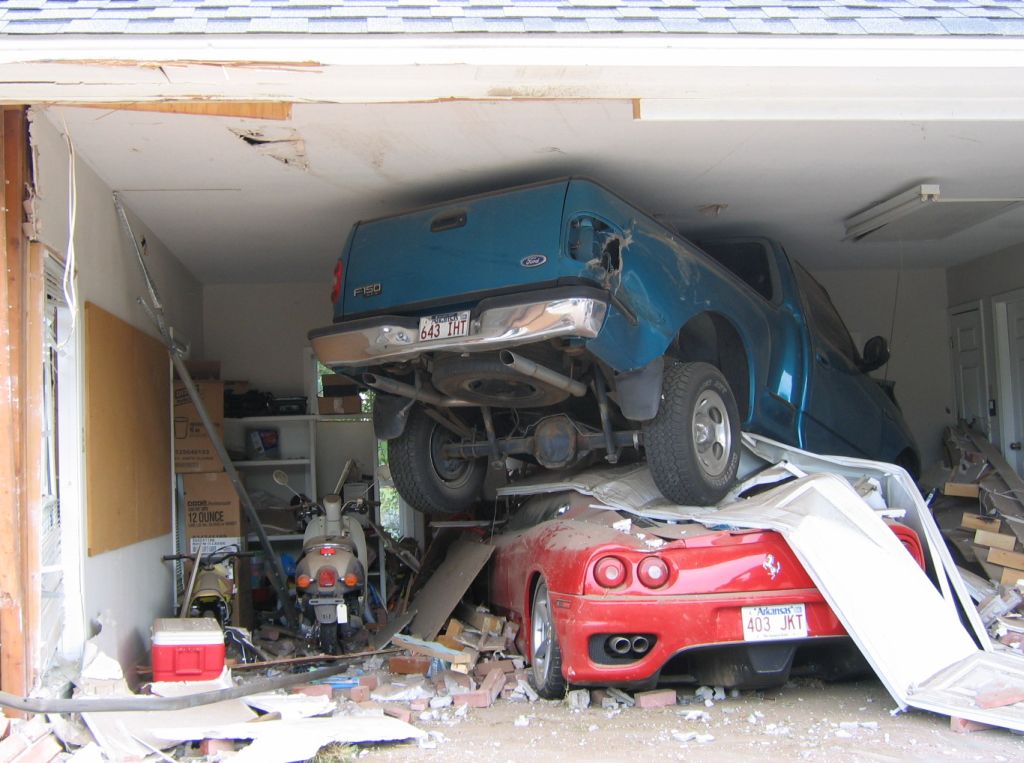
Let this image represent the Biotech/Pharmaceutical industries talent for putting the right people in the right place.

Blue truck = scientist

Garage = scientist job

Photograph = the human resource skills of the industry

From time to time I'll use this image to alert you to hot jobs in the industry.

Todays whopper stems from the company who I previously reported on for losing their CCSO. This company has 140 employees, many of them human resource professionals. Notice their use of a staffing agency.

We are currently working with a biotechnology company in Bothell, WA who is in search of an Analytical Biochemist. This is a contract position estimated to last 6 months.

Description:
Develop analytical techniques for characterization and assay of protein therapeutics.
Perform assays to support protein formulation development and production process development.

Requirements:
B.S. in analytical chemistry, biochemistry or related discipline.
Two or more years relevant experience in an industrial or academic lab is preferred.
Experience with protein analytical techniques such as SDS-PAGE, isoelectric focusing, spectrophotometry, ELISA, and HPLC of proteins and peptides.
Attention to detail in the execution and documentation of experiments.
Good scientific problem solving skills.
Strong interpersonal and team skills, and effective oral and written communication.
Local candidates only, please!

The company wants to hire someone to DEVELOP the methods to test their drug candidates. The company does not know how to test their drugs. They are not hiring someone to come in and run the tests that they have designed. They have no idea how to test their drugs.

So if you have a bachelors degree, two years experience and 6 months to kill, go help them out. Every biotech company needs to test their drugs. Do you know how it's done? They don't!

Obama Said There'd Be Days Like This


While perusing the television stations to find the Cardinals/Mets baseball game I was suddenly privy to an interview on Oprah. Honestly, I wasn't watching Oprah! I was looking for the ballgame! The man being interviewed was Barack Obama. I listened long enough to take away one very valuable piece of advice.

He said that we all need to be useful. That's the advice, now think about it. If you look at someone like Paris Hilton you might wonder what use she is to society. In spite of her lack of talent, she is useful. People like looking at her photos apparently and reading about her escapades. She has put herself in the spotlight and thus she is used to sell magazines and movies. She has a book out about her life up to the age of 20. It's not useful to me, but there are some book publishers out there that felt she was useful. People pay her just to show up at their parties. So, in spite of what some might think about her talents, she is useful.

The question we have to ask about the Biotech/Pharmaceutical industry is this. How useful are scientists? The take over of Icos by Eli Lilly sent out the message that the end result of scientific research is very important. The path taken to discovery is not. We here at the Cargo Cult Scientist are waiting for the job cuts to be announced. It's not an if, but a when issue. Will all of the research be halted at Icos? Will experienced researchers be tossed out on the street again?

In the golden age of Hollywood, silent movie actors became more famous than any human beings had ever been. When the talkies began these actors soon became obsolete. Actors with stronger voice skills became more useful. The golden age of biotechnology seems to gone the way of the silent movies. The industry still cranks out pills, but the scientific research that goes into them has changed. Real science is not as useful as having a good friend in the FDA. A bad idea backed with a lot of money will go further than a good idea with no money. For the short attention span leaders, sales people are more useful than early stage scientists. The universities and the industry do not hone the skills of it's laboratory work force. They are not as useful as a pretty drug rep moving the product. The message is clear. If you develop pills, you are failing us. If you sell the pills, you make the company go. You are useful.

What do you do if you've spent your career working with DNA and proteins in the lab? What do you do if you are an Icos employee who was working on the next molecule to be tested as a drug? In the Northwest, Icos was the biggest success story since Immunex. There is no one in line ready to snatch up your talents. The golden age of biotech is over. You're now like a silent movie star circa 1935. You need to reinvent yourself to become useful again.

Barack Obama made a very important point. Be useful. What does that mean if you are a scientist in the drug industry? To the Cargo Cult Scientist it means tack on more degrees and position yourself in front of drugs that are headed to the market. Get a PhD and supervise a crew of HPLC operators. Get an M.D. and run clinical trials. Finish up that masters degree and get into a CRA certification program. If you stay back and try to develop new drugs, you will fail. You will be a part of the problem that is no longer being tolerated by the industry. There is one hope that the Cargo Cult Scientist has however. If you feel like you are the type of person who thinks scientifically, take a chance. Stay back anyway and learn how DNA works. Work in a lab. Learn how to measure protein levels inside the human body. Learn learn learn. That doesn't mean tack on degrees to further your career. Learn how it really goes down in the laboratory. When the industry runs out of new and expensive drugs to sell, you just might be useful again.

Wednesday, October 18, 2006

Jenna Teaches Us A Lesson

There is something about this girl. She plays a shy receptionist from Scranton Ohio on the TV show "The Office." They put her in dork form, much like a Cargo Cult will put the tribe into airport form. But you can see right through the disguise. This is a pretty girl who can really turn it on if she wants to.

Now check out the girl dressed up to hit the town in LA. Nice!

I knew it. Totally hot. How many women can do this? The Cargo Cult Scientist sees them everyday. They do not know that they are beautiful because it's not inside them. Someone has made them feel less than attractive.

In order for the lovely Jenna to play her character she has to go in the opposite direction. She must pretend that she is working at a nowhere job and going home to her cat and their empty apartment in Ohio. She has to get into the character who does not feel comfortable in clothes that show off her curves. Somehow she plays the part well.

How does this pertain to the Cargo Cult Scientist blog? It's about appearances. We must all go out into the world and act the part that others have taught us to play. Universities mold us into the actors that we are in our professional lives. Family and friends mold us by encouraging certain types of behavior and discouraging others. But we all have something inside us that is unique. How can we tap into that and break away from playing the part we have been assigned?

Trubion

It has a fabulous view. From the 11th story offices you have a 180 degree view of Elliot Bay. Happy workers mill about in a laid back office setting. They are there to develop the next big thing in biotechnology. They call them SMIPs which is short for small modular immunopharmaceuticals. They are single-chain polypeptides engineered to have the same binding and activity function of a monoclonal antibody (mAb). They are one-third to one-half the size of conventional therapeutic mAbs, yet maintain the same in vivo half-life.

Leading candidates:

TRU15 Rumatoid arthritis non-Hodgkins Lymphoma

TRU16 non-Hodgkins Lymphoma

TRU17 cancer

Remember the pipeline standards in biotech. RA and cancer are highly desirable diseases. Targets are established so no discovery needs to take place. Binding to the known target is step one.

Trubion uses the success story of Rituxan. This is a monoclonal antibody that binds the same TRU15 target, CD20 which is expressed on the surface of B cells. A phase III studiy with Rituxan has shown that the antibody binds to B cells and results in B cell depletion. B cell depletion results in significant clinical improvement. Trubion thus has to merely follow in the path being stomped down by the makers of Rituxan.

The Cargo Cult Scientist has used Rituxan in mice studies. The antibody works. None of the mice who recieved Rituxan developed tumors. There was no need to manipulate the data as we did with mice in the group who received our drug. I believe I've talked about this shameful day in a previous post. Since Rituxan was the positive control, we simply did not mention these results. Our drug was an antibody against denatured type IV collagen. Our negative control was PBS. We manipulated the data to show a double digit percentage difference in tumor size between our anti-collagen Ab and the PBS. This made for a nice bar graph.

It's easy to show an antibody binding to a target. What about a SMIP? Did Trubion use the curves? Did they make any attempts to assign an affinity value for TRU15? How did they evolve to a number 15? What about the first 14? Were any related? Was affinity improved from a previous SMIP?

In my laboratory experience I have yet to meet a PhD scientist who has ever measured protein to protein affinity. Measuring affinity is different than claiming high affinity. Using surface plasmon resonance will provide the investigators with an affinity constant. The affinity of an interaction is determined from the level of binding at equilibrium (seen as a constant signal) as a function of sample concentration.


The next step is to determine the biological effect of the binding. How does it get to its target. How many mols reach the target? These are the questions. High above Elliot Bay is a company who intends to develop drugs better than monoclonal antibodies. They are not providing binding constants, curves, nor methods of comparinig SMIPs to antibodies. Before any biological functions can be claimed, they must provide some data that shows that SMIPs have reached the target and that they function in a safer way the an antibody. Human antibodies have been developed by evolution. How well do Trubions SMIPs match up.

Is there a scientist in the house who can compare a SMIP to an antibody?

Icos

Besides Amgen, Icos was the only biotech company in the Seattle area that had ever turned a profit. They did so last year. Yesterday they were bought by Eli Lilly for 2.1 billion dollars. Good work guys. Significant layoffs are coming your way.

Icos CEO, Paul Clark, said employees greeted the news with sadness and anxiety but there was enormous "pride in what they built and what they accomplished." The deal was just too good to pass up. Icos has been working with Lilly since 1998 on an erectile disfunction drug called Cialis. It's not a cure for cancer but it's a money maker. Worldwide sales of the drug are on track to bring in between 920 to 950 million dollars. Contrast this with the other leading biotech in Seattle Trubion. They raised 52 million dollars from investors, the low end of what they intended to raise. Their goal was 86 million. If that's a success, imagine being a part of a company that has a drug that will bring in 950 million. Some of that money will count towards a profit! But it's all going away.

The first activity in this deal will involve Eli Lilly handing over 2.1 billion to the investors of Icos. Paul Clark said it would have been "really wonderful from a geographic standpoint" if Icos remained an independent company in the Pacific Northwest. As a businessman, he had to make the best decision for his shareholders. Lilly paid 32$ per share, an 18% premium over Mondays stock price and 32% over the 90 day average. Still rumors of the buyout had people estimating around 36$ per share.

The decreased valuation did generate some discussions on Icos mistakes. First they had a deal with Lilly that prevented outside bidders from jacking up the price. Second they failed to come up with a second drug. Only one airplane landed. Since most biotech companies are actively engaged in futile drug development projects, this piece of Icos was not an asset. Only Cialis is expected to make this deal worth the 2.1 billion. Still, Icos had to try. You must have several drugs in the pipeline. In spite of their mistakes, they made money.

For the investor, Icos is a rare success. One investor, Bill Gates will walk away with 173 million dollars. Here in the Northwest we're not too concerned if Bill gets any more money in his time here on planet earth. In fact, we'd like some of that money to go to some of the others living up here. People who once worked at Icos, making it a company worth 2.1 billion dollars. True, Cialis was what Lilly bought. But there were a lot of people working and earning a living. Now there will be less. It's sad when the Cargo Cults of biotechnology suddenly rise above the norm and actually produce a product. Then they make a profit. Then they go away.

Tuesday, October 17, 2006

Cantwell and McGavick

The Cargo Cult of our government is something I avoid. My stance on government is that they quite often fail to inform their public that they have little power over certain things. The best they can do for education for example is to fund it sufficiently. The little rules they insert into their bills create paperwork the takes up the time that should be spent teaching. They create bureaucracies that eat up the money that is allocated. In short, I beleive that any decrease in a Cargo Cults activity is best.

So tonight we had our senate debate. Cantwell and McGavick are the two main party candidates. McGavick, the Republican, made the comment that we should somehow test welfare recipients for drugs and alcohol use. The non-Dem/Rep candidate who had to shell out 1.2 million bucks to be there, made a comment related to McGavicks. We should test members of the house and senate for drugs and alcohol. Ha!

Do we not test these guys? They are steering our country into the future. Are they doing so under the influence? Why worry about the lower levels. They are definitely going to have a high percentage of their population using. What about the guys who are making the big decisions? If the use of drugs and alcohol is detrimental, then they should be tested. I don't want these politicians out there having the freedoms that they rule out for us.

If a Cargo Cult is one that sets up an airport that has no idea how airplanes work or where they come from, then our government qualifies as a Cargo Cult. The highest ranking officials do not know how to build a bridge. They do not know when they are capable of real change or just plain chatter. They talk and they talk. When the day is over they meet with their lobbyists for fine dinners and who knows what. Are they home reading the bills they are there to vote on? Probably not. If we could just pass a law that prohibition is back in effect, only in the House and Senate, then we could assure good sober government. Next we go after the money. There is no drug in Washington greater than money. Nevermind the big debate where you have to convince people that you will fight against abortion or immigration. We must pass laws that prevent our elected officials from making bad decisions. If we think it's a good idea for welfare mothers we sure as hell should apply the same logic to senators and congressmen.